Price: $39.00 - $16.80
(as of Feb 27, 2026 01:18:16 UTC – Details)

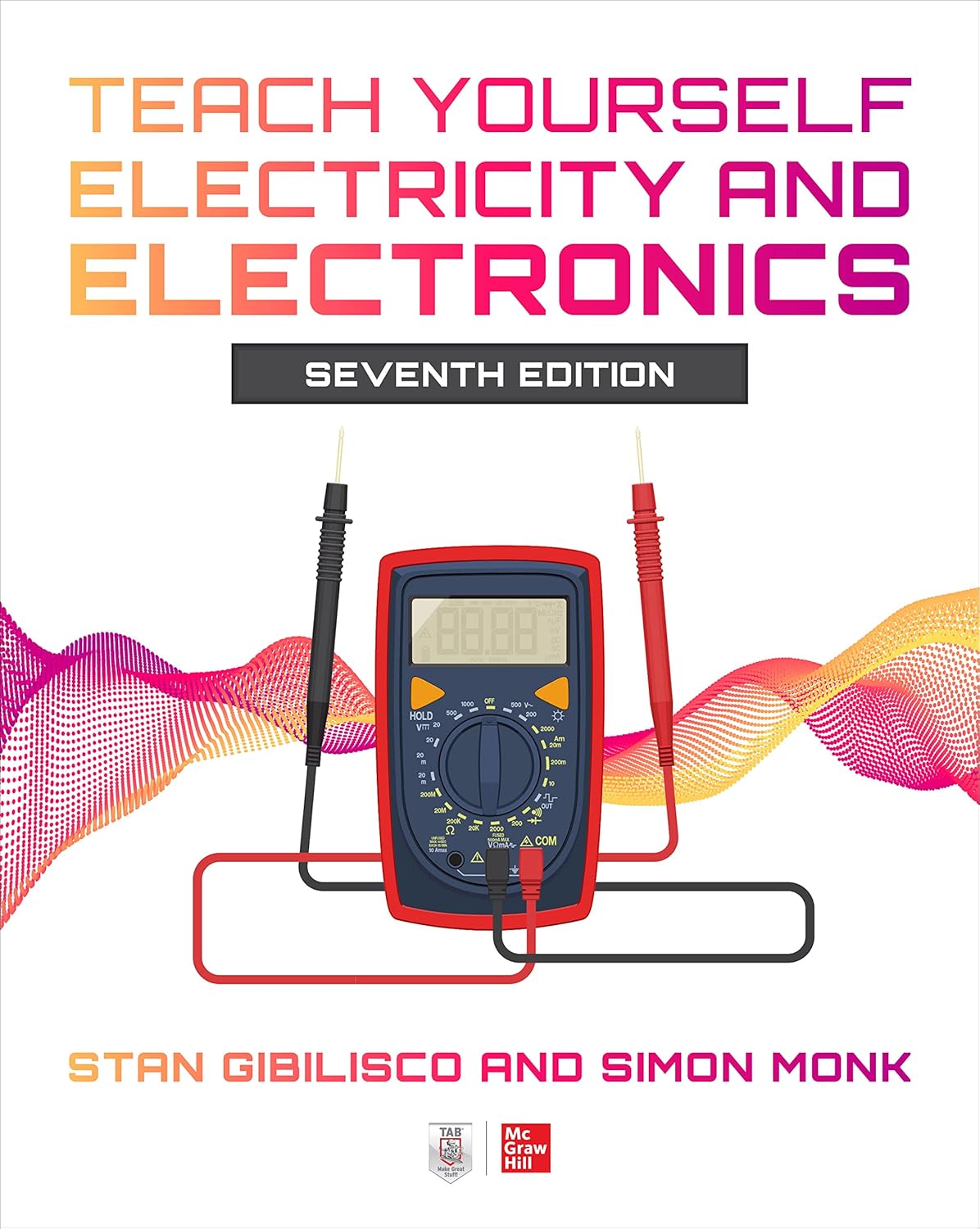
Teach Yourself Electricity and Electronics, Seventh Edition: A Comprehensive Review
As someone with a long-standing interest in electronics but no formal engineering training, I’ve explored numerous introductory texts on the subject. “Teach Yourself Electricity and Electronics” by Stan Gibilisco and Simon Monk stood out as a remarkably comprehensive yet accessible resource that successfully bridges basic concepts with modern applications.
Content and Organization
The book’s greatest strength lies in its logical progression through increasingly complex topics. Starting from fundamental principles, it builds knowledge systematically, introducing pre-requisites before they’re needed. Unlike many introductory texts that rush to application without establishing conceptual foundations, this seventh edition takes time to explain the “why” behind the “how.”
The organization feels intuitive – beginning with direct current (DC) fundamentals, moving through magnetism, and then progressing to alternating current (AC) before introducing semiconductor devices. This trajectory mirrors how electrical theory actually developed historically, which provides context for understanding relationships between concepts.
With 496 pages covering topics from basic DC circuits through digital systems and microcontrollers (including Arduino), the authors manage to strike a reasonable balance between depth and breadth. You won’t find exhaustive specialization in any single area, but the coverage is comprehensive enough to serve as a genuine reference rather than just a beginner’s tutorial.
Clarity of Explanation
The hallmark of effective technical writing is the ability to explain complex concepts in accessible language, and this book largely succeeds at this challenge. The authors employ plain language explanations that avoid unnecessary jargon while maintaining technical accuracy. Step-by-step lessons break down calculations and analyses into manageable portions.
Illustrations and diagrams appear generously throughout the text. These visual aids prove essential when grappling with abstract concepts like phase relationships in AC circuits or visualizing current flow. The diagrams include clear annotations that connect directly to the accompanying explanations.
One particularly helpful feature is the practical examples that follow theoretical explanations. These illustrate how concepts manifest in real-world scenarios, which helps cement theoretical knowledge. For instance, after explaining Ohm’s Law, the book immediately provides several worked circuit examples applying the relationship between voltage, current, and resistance.
Updates in the Seventh Edition
The seventh edition represents a significant modernization of the material. While previous versions covered the fundamentals adequately, earlier editions sometimes felt dated when addressing contemporary electronics. This latest version has been thoroughly revised to reflect the pervasive role of Integrated Circuits in modern electronics.
The emphasis on ICs and practical electronic design marks a substantial shift from previous editions. Rather than still treating discrete components as the default approach, the book acknowledges how modern electronics has evolved toward integrated solutions. This matters enormously because it prevents readers from developing a working understanding based on outdated practices.
Additional welcome updates include expanded coverage of microcontrollers (particularly the Arduino) and wireless technology. These additions make the text relevant for hobbyists and makers who might use contemporary DIY platforms. The inclusion of topics like sensors and transducers reflects how electronics education must evolve to address the Internet of Things and embedded electronics.
Practical Applications
Beyond theory, the book incorporates substantial practical guidance. The section on wireless transmitters and receivers provides insight without drowning readers in specialized mathemics. Similarly, the coverage of digital circuits strikes a balance between algorithmic understanding and practical constraints.
The troubleshooting guidance proves valuable. Many electronics texts present perfect scenarios without addressing common problems or measurement errors. This text regularly pauses to discuss what might go wrong and how to diagnose issues systematically.
The companion online exam through the publisher enhances the self-teaching experience. Unlike traditional textbooks that leave self-learners without assessment tools, this digital component lets users evaluate comprehension and identify weak areas. This feature proves particularly valuable for independent study where external feedback isn’t available.
Strengths
Comprehensive Scope: Few introductory texts manage to cover both fundamental theory and contemporary applications without becoming either superficial or overwhelming. This book succeeds admirably here.
Accessible Approach: The writing remains approachable even when tackling complex topics like impedance matching or amplifier design. Mathematical requirements stay at a level appropriate for the target audience (high school algebra), with stepping stones for more advanced concepts.
Modern Relevance: The revised edition honors classic fundamentals while keeping modern applications front-and-center. This provides both theoretical depth and practical currency.
Organization: The pedagogical sequencing helps readers build confidence gradually rather than confronting challenging material prematurely.
Print Quality: The physical book has satisfying heft with clear typography and well-reproduced diagrams. The durable binding suggests it will withstand years of reference use.
Potential Limitations
Pacing Variations: Some readers report uneven pacing throughout chapters – certain sections move briskly while others feel more deliberate. This occasionally creates the sense of compressed explanations in specific technical areas.
Mathematical Depth: While accessibility is generally a strength, readers wanting more rigorous mathematical treatment of certain topics (particularly power analysis and control theory) may find the treatment somewhat simplified.
Hands-on Integration: Though practical examples appear throughout, the book doesn’t provide accompanying hands-on projects. Readers seeking a laboratory component would need to complement this text with practical experimentation resources.
Target Audience Assessment
This book best serves adults pursuing self-directed education in electronics. Students in formal programs might find it a valuable supplement but may also need texts with more specialized focus depending on their curriculum. Hobbyists with some background will appreciate the updated content while finding clear explanations for weak areas.
For complete beginners with no technical background, the early chapters provide gentle introductions, though persistence through the more technical later sections requires genuine interest and motivation.
Final Assessment
“Teach Yourself Electricity and Electronics” in its seventh edition successfully updates a respected title for contemporary readers. The modernization reflects how electronics practice has evolved while preserving the educational thoroughness that made earlier editions valuable.
The combined expertise of Gibilisco’s long-standing authority in electronics education and Monk’s contemporary maker/hacker perspective produces a balanced work that honors tradition without becoming obsolete. The focus on integrated circuits and microcontrollers represents necessary evolution of the topic areas.
For independent learners seeking comprehensive, modern, and accessible coverage of electronics fundamentals and their contemporary applications, this text delivers exceptional value. While not specialized enough for advanced engineering coursework, it provides everything needed to develop adult-level competency in electrical theory, circuit analysis, and modern electronic design.
The physical quality, comprehensive index, and included online resources create a package that justifies its modest price point. Whether refreshing existing knowledge or exploring electronics for the first time, this seventh edition deserves consideration as a foundational resource for technical self-education.
