

Price:
(as of Feb 26, 2026 20:37:40 UTC – Details)

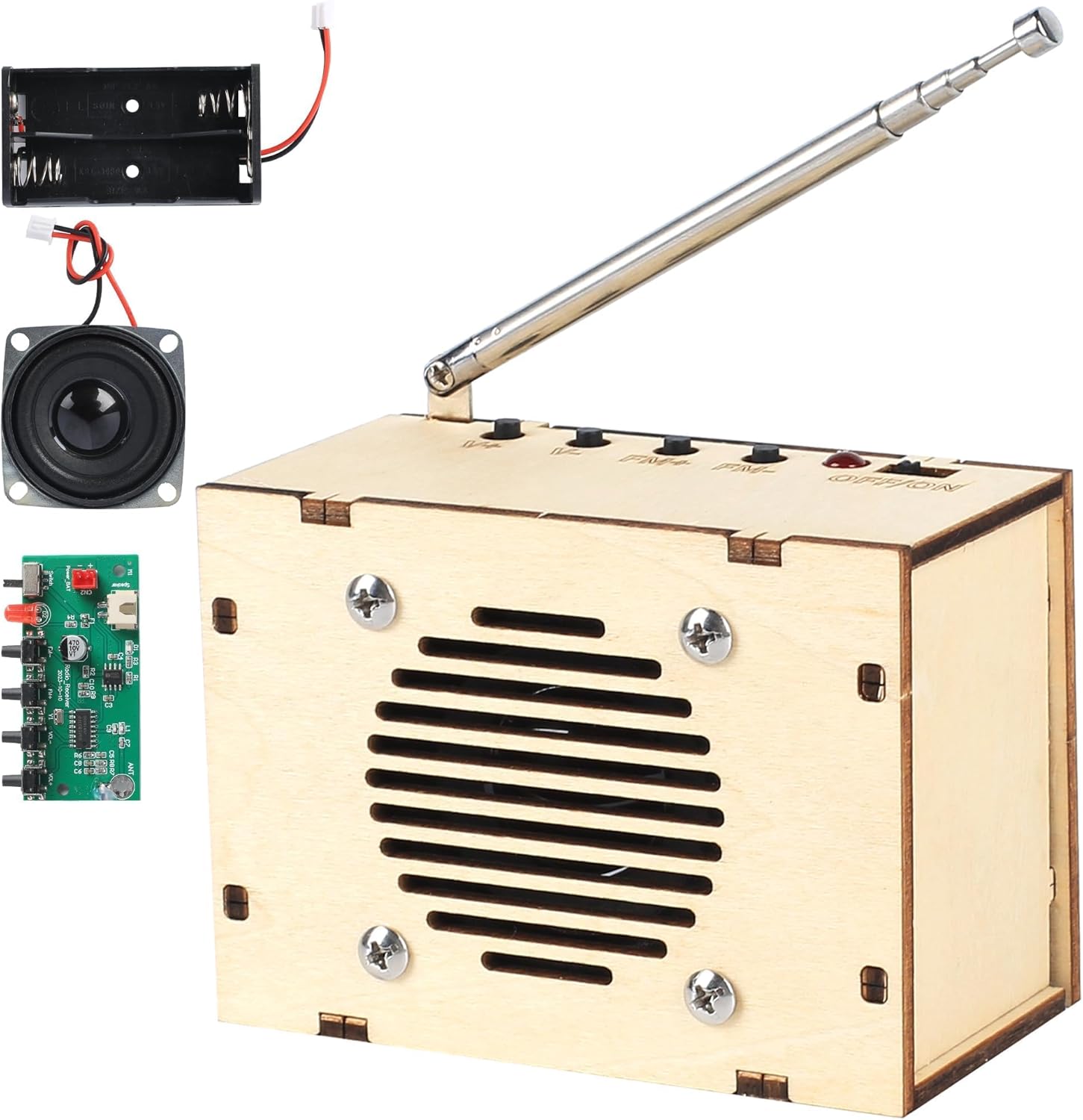
As a child, I spent countless afternoons hunched over puzzle-like electronics kits, connecting wires and snapping together components until a simple motor whirred to life or a light blinked. Those moments—part experimentation, part triumph—are the same spark that this FM radio kit from Goostero promises. It’s a full STEM project cleverly wrapped in a timeless wooden shell, designed to let young makers build an actual working FM radio from the ground up.
Right away, the materials stand out. The wooden housing isn’t painted acrylic or PVC plastic, but a refined natural finish. This immediately conveys a solidity that often feels absent in children’s electronics, and it invites curiosity: how did makers even build radios before plastic was everywhere? The use of real wood also makes the kit an appealing option for parents wanting more timeless, tactile materials in a child’s hands rather than disposable plastic.
The build process is intentionally accessible. There’s no need for soldering, so kids can assemble snap-together circuitry with confidence. The instructions are detailed and linear, guiding the user through circuit placement, connector snapping, and antenna attachment. Each component’s role is clearly indicated, and the “aha” moment comes when the final piece clicks into place and the unit actually seeks FM frequencies between 88 and 108 MHz. That sense of accomplishment—seeing something tangible and functional appear from small parts you handled yourself—doesn’t fade easily.
Functionally, the device is a bona fide radio receiver. The retractable antenna boosts reception compared to more miniaturized solutions, and tuning is responsive without being finicky. Volume control is straightforward, and the power indicator offers a little glow that signals success without being distracting. Powered by two AA batteries (which the buyer will need to provide), it’s portable enough to move between rooms or even outdoors, provided the radio environment is strong enough.
Its uses extend well beyond just building it once. Because the design is attractive but practical, the radio doesn’t feel like a throwaway experiment after assembly. Many assembled projects gather dust; this one can stay in everyday rotation for a child or teen—especially handy as a productive alternative to staring at screens during mornings, study sessions, or car rides.
As a gift, the appeal is broad. The “techy” edge will resonate with kids naturally drawn to electronics, but its old-school radio charm and classic wood finish also give it a nostalgic aesthetic, making it an impressive present across ages and genders. It slots easily into birthday, holiday, or even “just because” occasions, and its evergreen educational value means it’s unlikely to be quickly forgotten or discarded.
What sets it apart is that it balances form with function so well. There are plenty of snap-circuit kits that teach electronics, but fewer that culminate in a usable object that feels like a keepsake. The fact that it sidesteps soldering also means parents don’t have to supervise with safety concerns, but kids still get hands-on exposure to basic physics, circuitry, and sound concepts.
Of course, it isn’t without limits. The FM band only gives access to commercial radio, so kids keen on shortwave or digital audio won’t find it here. A less technically experienced user might still encounter minor troubleshooting moments if connections are loose or if environmental interference affects tuning. However, these are minor next to the overall strengths.
Ultimately, this kit delivers a rare combination: a tangible lesson in how radio technology works, a satisfying end product that can be used every day, and a built-to-last design that feels substantial rather than disposable. For kids in the upper-elementary to early-high-school range—especially those hungry for hands-on STEM challenges—it offers an inviting gateway into the world of electronics without ever losing its sense of fun.
