

Price:
(as of Feb 27, 2026 02:26:46 UTC – Details)

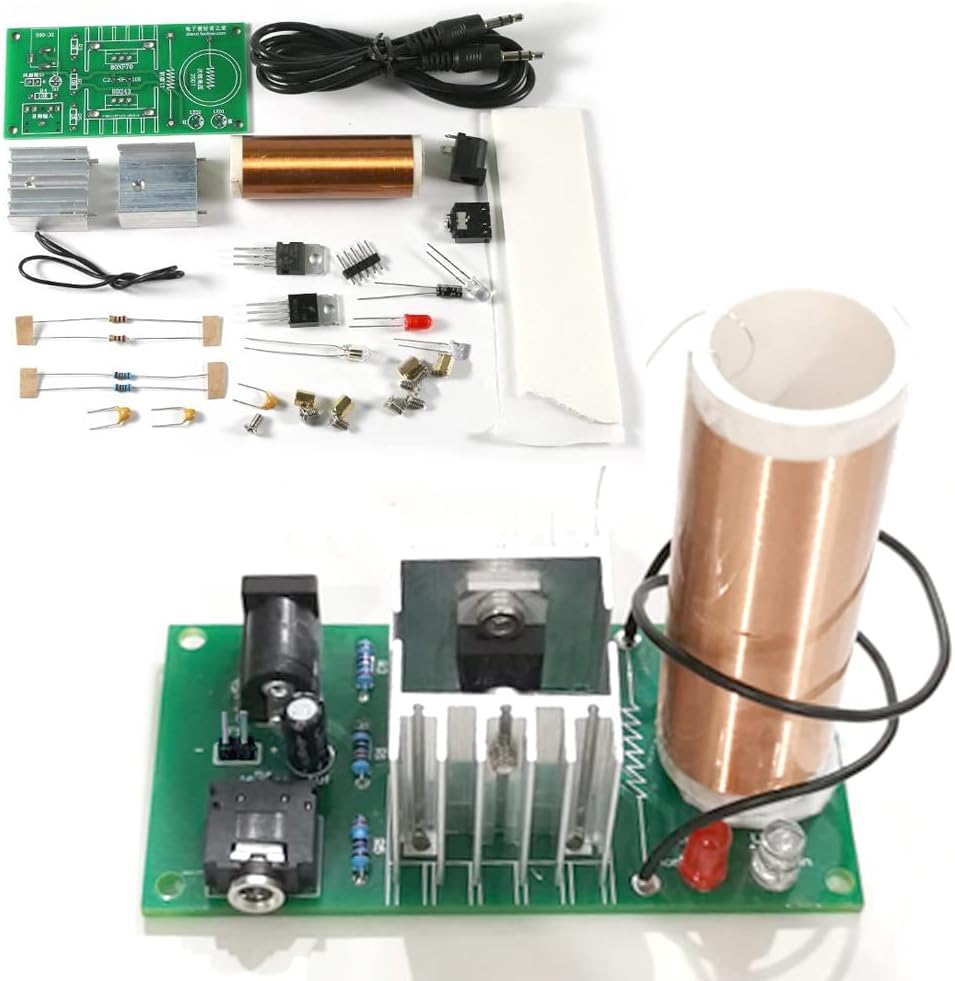
When the package first arrives, the kit’s compact cardboard box feels neat but unassuming. Inside, every component is separated into small plastic bags, which keeps things tidy but requires an extra moment to sort through. A printed parts list and QR code are included for accessing the full English instructions, which are a real plus for beginners.
The assembly progress is propelled forward mainly by the clear PCB markings, which match the component values from the instructions closely. That said, small deviations—like an additional resistor here or a slightly different capacitor value there—mean having the instructions open while you work is essential. Keeping a multimeter nearby helps too, as verifying each component before soldering prevents rework later.
Soldering is straightforward if you’re comfortable with the basics. For newcomers, it’s a good chance to refine technique, but also more prone to errors like cold joints. After assembly, it’s worth double-checking solder points with magnification before powering up, as no circuit changes occurred mid-course.
When power is applied within the 15-24V DC range (many find 18V or 20V to work well), the transformation from quiet components to miniature lightning storm is immediate and impressive. Electric arcs leap from the top coil, and nearby fluorescent tubes glow without contact—just by being in the near field. Music playback is more experimental: faint but audible, especially with the coil held near a non-contact speaker. Volume is low compared to standard speakers, but the novelty of playing songs through plasma arcs outweighs that limitation for most.
Results vary with voltage input—higher voltages yield more robust arcs and a stronger “aura” field for lighting effects. It’s satisfying to see physics in real time, especially for teens or hobbyists looking for a hands-on project. For teaching purposes, it serves as a concise, visual introduction to electronics and Tesla coil theory.
The main technical gotcha is preparing the secondary coil wire: the enamel coating on both ends must be removed by scraping or burning before soldering, otherwise it just won’t make electrical contact. This can feel fiddly, but once down, the rest proceeds smoothly.
Packaged as a “not finished” product, it fills both an educational and recreational niche. The after-sales service is responsive to missing or faulty parts, so confidence in long-term support is higher than with some comparable kits.
Overall, weight-wise it feels modest, finishing out at about a pound once assembled, and its successful operation brings far more satisfaction than its humble parts tally would suggest.
