

Price:
(as of Feb 26, 2026 22:55:38 UTC – Details)

Donner DDP-80 Digital Piano Review: A Compact and Stylized Entry into Piano Playing
In recent years, digital pianos have become an increasingly attractive option for both aspiring and experienced musicians, particularly those working within limited space. The Donner DDP-80 Digital Piano positions itself as an intriguing entry in this category, combining the 88-key weighted keyboard action with a distinct mid-century modern aesthetic. As someone who has spent considerable time with this instrument, I can attest to both its strengths and the thoughtful design choices that set it apart from typical digital keyboards.
Design and Build Quality
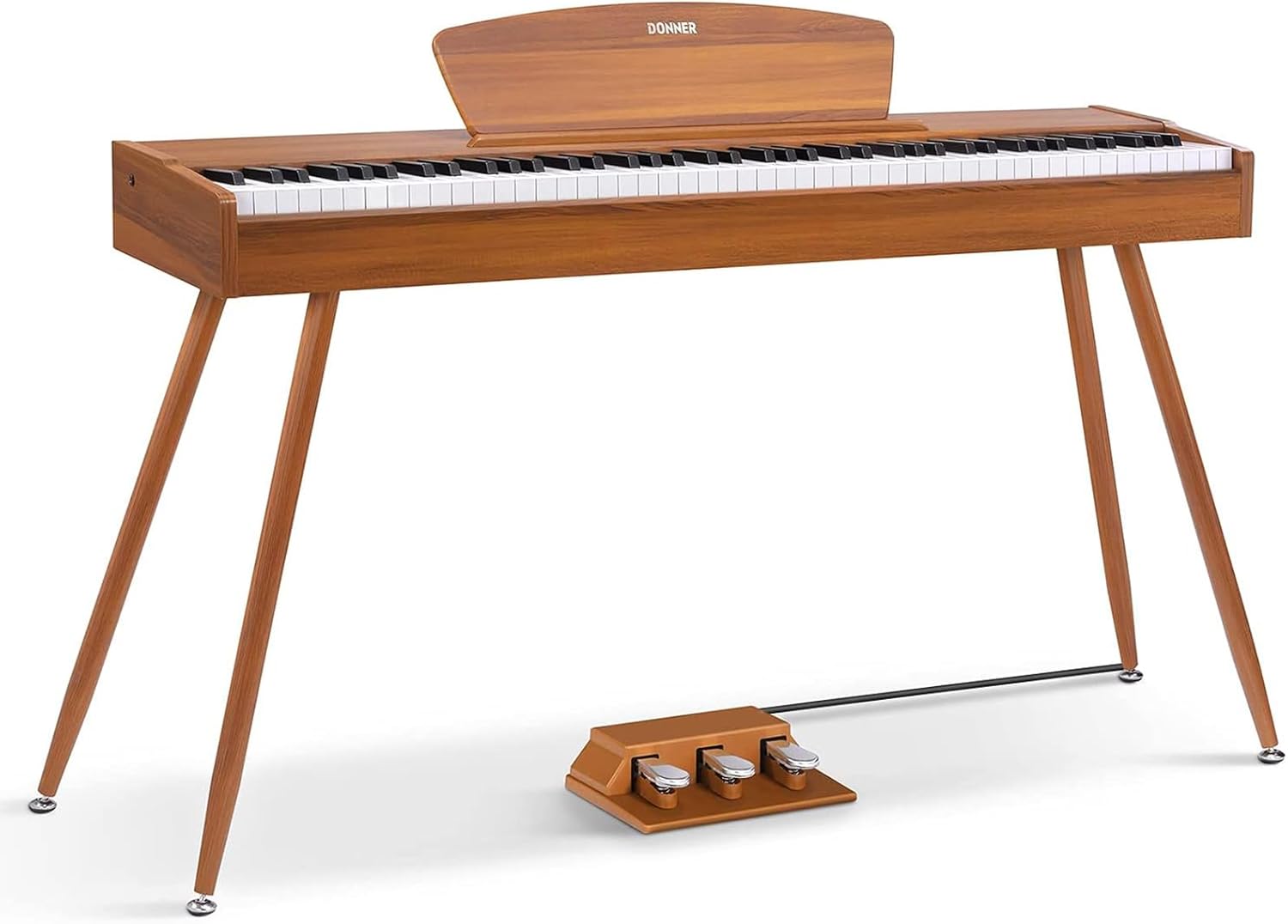
Perhaps the most immediately striking aspect of the DDP-80 is its aesthetic presentation. Unlike the utilitarian black designs that dominate the digital piano market, this instrument features a retro wood grain finish that Donner describes as “retro wood color.” The matte wood-like appearance evokes mid-century furniture design, allowing the instrument to blend seamlessly into living spaces rather than standing out as a piece of musical equipment. This design philosophy extends to the clean lines and minimalist control interface—there’s hardly a button or knob in sight, save for the power switch discreetly located on the back.
The build quality is solid for the price point. The keyboard sits at a comfortable height for seated playing, and the stand itself feels stable and well-balanced. Once assembled (a straightforward process requiring no more than 20-30 minutes), the instrument maintains its position without any wobble—an essential factor for confident, dynamic playing. The weight of the unit, at approximately 37 pounds (including the stand), makes it heavy enough to feel substantial but still manageable for repositioning if necessary.
Keyboard and Playing Experience
The core of any digital piano experience is the keyboard itself, and the DDP-80 delivers a weighted 88-key hammer action keyboard. This means the keys replicate the feel of an acoustic piano, with graded weighting that’s slightly heavier in the bass register and progressively lighter toward the treble. This weighted action is crucial for developing proper finger strength and technique, making it particularly valuable for students and serious learners.
The keyboard’s response has been thoughtfully calibrated using what Donner calls “accurate capture of finger strength.” In practical terms, this means the instrument responds well to subtle variations in touch, allowing for quiet, delicate passages as well as emphatic, powerful playing. There is also a layer of simulated ivory texture on the key surfaces, which helps prevent slippage during extended playing sessions—a nice touch appreciated after an hour or so of practice.
With a maximum 128-note polyphony, instances of dropped notes are virtually nonexistent, even during complex passages with pedal use. This specification might not compete with flagship instruments, but it adequately serves even moderately advanced repertoire.
Sound Quality and Tone Generation
The heart of the DDP-80’s sound engine is Donner’s implementation of the French DREAM sound source, a respected timbre generation system in the digital piano world. The acoustic piano sound produced is surprisingly rich and expressive for this price category. The piano offers a single primary acoustic piano voice, along with several additional voices including electric piano, organ, bass, and strings, though admittedly most players will likely stick with the default acoustic setting.
The twin 25-watt speakers (with a maximum combined output of 50 watts) do an admirable job of filling a typical room without distortion, providing sufficient volume for practice and even small gatherings. The stereo imaging creates a pleasant sense of spatial distribution, and when playing without headphones, the sound fills the room naturally without sounding confined to the instrument itself.
The triple pedal system included with the DDP-80 deserves mention—it provides sustain, sostenuto, and soft pedal functions, just as you would find on a grand piano. This granularity allows for more nuanced expression and is particularly valuable for classical repertoire where half-pedaling techniques matter.
Connectivity and Modern Features
In keeping with modern practice requirements, the DDP-80 offers a USB-MIDI connection that allows the instrument to interface with computers, tablets, and smartphones. This opens up possibilities for using educational apps, recording software, and composition tools. The process of connecting to devices is straightforward, though users should note that only one device can be connected at a time.
The rear panel houses the headphone jack (6.35mm, compatible with most standard headphones) and the pedal connector. The headphone mode automatically adjusts the audio output so that when you plug in headphones, the onboard speakers mute, allowing for undisturbed practice. This is particularly valuable for late-night practice sessions or apartment living.
One minor limitation: the DDP-80 does not include Bluetooth connectivity, which some competitors offer. While the USB connection covers most needs, Bluetooth would have added convenience for wireless audio playback or connection to mobile devices.
Practical Considerations
The DDP-80 comes with all necessary accessories: an adjustable-height matching bench, triple pedal unit, and a universal power adapter (100V-240V input, 12V DC output at 3A). The bench itself is reasonably comfortable for practice sessions up to an hour, though you might consider a separate piano bench cushion for marathon sessions.
Donner provides a one-year warranty and customer support through their online team, which can be reached through the product order page. The company’s responses have been prompt and helpful in my experience when I’ve had basic setup questions.
Assembly is straightforward, with all necessary tools included and clear instructions provided. The entire process is tool-free and can typically be completed in under 30 minutes, making this a great option for those intimidated by complex setup procedures.
Who Is This For?
The DDP-80 hits a sweet spot for several user categories. For beginners and intermediate players, the weighted keyboard provides genuine piano-like feedback crucial for developing correct technique. The attractive appearance makes it suitable for living room use, unlike many practice keyboards that are better concealed in bedrooms or studios.
It also works well for returning players who may have learned on acoustic pianos and want an authentic feel without the size or maintenance requirements of a traditional instrument. The retro aesthetic particularly appeals to those sensitive to the institutional appearance of many digital pianos.
However, performing pianists might find the limited selection of voices, lack of split/layer capabilities, and absence of Bluetooth connectivity somewhat restrictive for advanced applications.
Final Thoughts
The Donner DDP-80 represents a thoughtful approach to the entry-level digital piano market. By focusing on the essentials—a good weighted keyboard, respectable sound quality, and practical connectivity—while adding distinctive visual design, Donner has created an instrument that serves its core purpose admirably.
At its price point, some compromises are inevitable compared to premium instruments, but the DDP-80 delivers where it matters most. The playing experience feels authentically pianistic, the sound is more than adequate for home use, and the aesthetic integration into living spaces is genuinely innovative.
For students, hobbyists, or anyone seeking an attractive, space-conscious instrument that delivers a genuinely piano-like experience without breaking the bank, the Donner DDP-80 merits serious consideration. It proves that digital pianos need not sacrifice character for functionality, successfully bridging the gap between musical instrument and furniture in a way that few others manage.
