Price: $24.99 - $21.73
(as of Feb 26, 2026 19:27:45 UTC – Details)

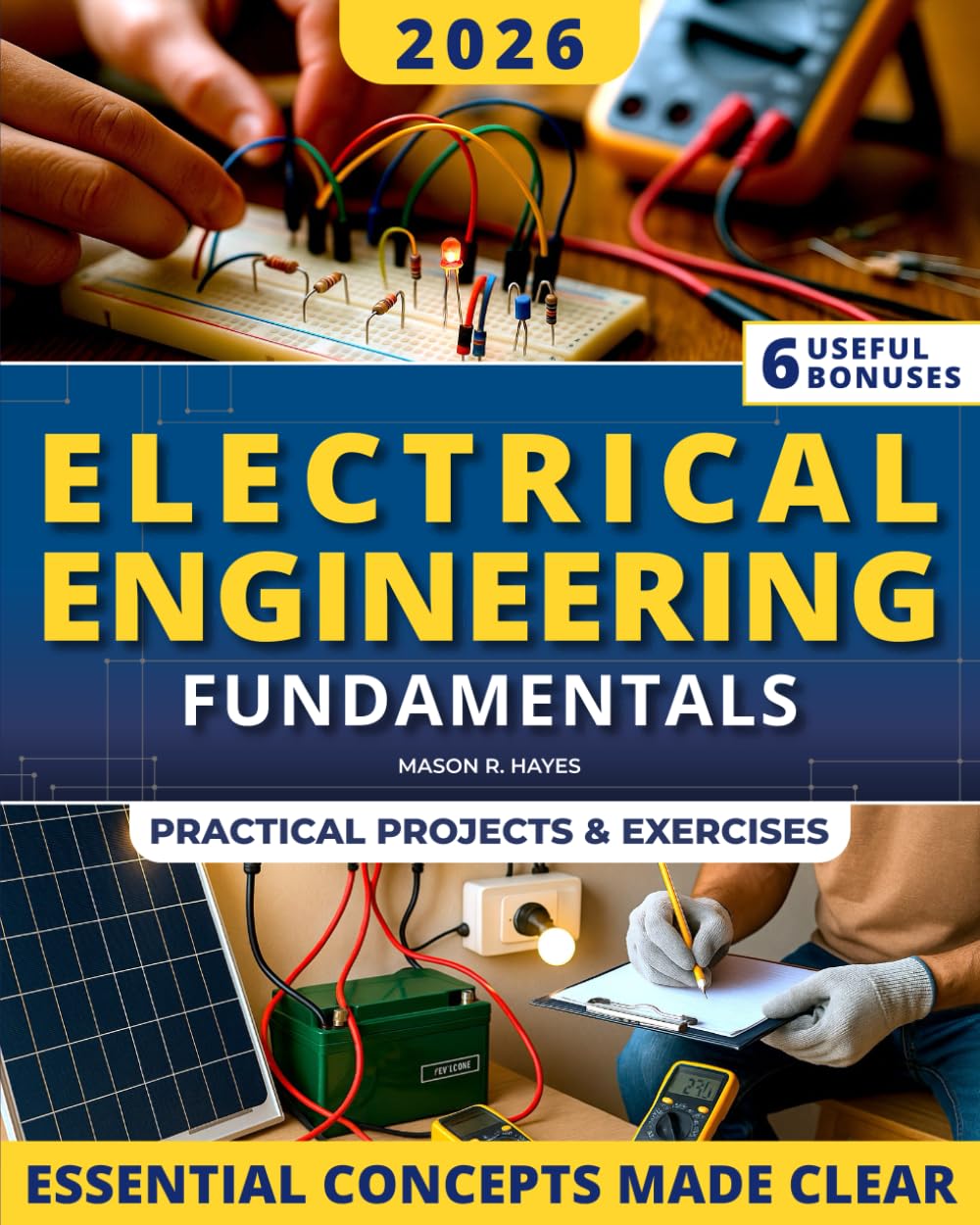
Electrical Engineering Fundamentals: A Clear and Practical Introduction to Core Concepts – A Comprehensive Review
The struggle is real. Voltage, current, resistance—these aren’t just abstract terms in a textbook; they’re the fundamental language of our modern world. Yet for millions of students, hobbyists, and professionals, electrical engineering concepts remain frustratingly opaque, a confusing jumble of Greek letters and memorized formulas that disappear from memory as soon as the exam is over.
“Electrical Engineering Fundamentals: A Clear and Practical Introduction to Core Concepts” by Marco Elizabeth takes a refreshingly different approach to this perennial problem. Instead of treating electrical engineering as a collection of isolated formulas to be memorized, this book presents it as an interconnected system—a truly revolutionary way to learn the subject.
A Novel Pedagogical Approach
What sets this book apart from countless other introductions to electrical engineering is its philosophy. The author recognized what has frustrated generations of learners: traditional textbooks either drown readers in mathematical theory without practical context, or stay at such a superficial level that nothing truly sticks. This book charts a middle course, using plain language, visual explanations, and real-world applications to build genuine understanding.
The approach is beautifully simple and profoundly effective. Rather than asking you to memorize that V=IR, it explains why voltage, current, and resistance are fundamentally connected in a way that makes intuitive sense. This doesn’t just help with passing tests—it helps with actually understanding how electrical systems work in the real world.
What the Book Covers
The content is thoughtfully organized for maximum comprehension. The book starts with core electrical engineering concepts explained as a coherent system rather than isolated topics. This systematic approach helps readers understand not just individual components but how they interact as part of a larger whole.
Key learning areas include an in-depth examination of how voltage, current, resistance, and power actually interact—not just their mathematical relationships, but their physical significance. The section on the five fundamental components every circuit uses (resistor, capacitor, diode, inductor, and transistor) provides essential knowledge without overwhelming readers with unnecessary detail.
One of the most valuable aspects is how the book teaches circuit diagram reading and interpretation with confidence. For many beginners, circuit diagrams look like hieroglyphics; this book transforms them into readable maps of electrical flow.
The treatment of AC versus DC power is particularly practical and accessible. Rather than getting lost in theoretical waveforms, readers learn the real-world applications and implications of each type.
The Power of Visual Learning
The book’s visual approach deserves special praise. Electrical concepts are inherently abstract—you can’t see electrons flowing—so good visualizations are absolutely crucial. The author provides diagrams and visual explanations that transform these invisible phenomena into understandable concepts.
This visual methodology extends to the safety principles covered in the book. Electrical safety can seem dry and forgettable when presented as a list of rules, but when explained visually with clear examples of what can go wrong (and right), it becomes genuinely memorable and valuable knowledge.
Real-World Applications and Exercises
Theory without practice is hollow, and this book ensures that readers don’t just learn concepts in isolation. Every major concept is reinforced with exercises designed to build genuine comprehension. More importantly, practical applications are woven throughout, connecting classroom knowledge to real systems—whether that’s understanding household wiring, electronics projects, or professional applications.
These real-world connections prepare readers not just for exams but for actual work with electrical systems. Someone finishing this book won’t just pass a test; they’ll have the confidence to work with real circuits, understand technical documentation, and continue learning independently.
Accessibility for All Learners
The claim that “no prior engineering background is required” isn’t just marketing—it’s genuinely accurate. The language is approachable without being condescending, and concepts are introduced in a logical progression that doesn’t assume technical knowledge. This makes the book valuable not just for complete beginners but also for professionals looking to refresh their understanding or fill gaps in their knowledge.
The book’s versatility is striking. Students will find it invaluable for building a strong foundation before tackling more advanced courses. Self-learners craving clarity will appreciate the absence of unnecessary complexity. Professionals can use it to refresh core concepts without wading through outdated or overly theoretical material.
The Complementary Bonus Materials
The bonus materials included with the book add significant value. The quick-reference cheat sheets for circuit symbols provide exactly the kind of instant reference that makes using the book as a lifelong resource possible. The safety rules poster distills crucial safety information into an easily memorable format.
The tools and parts checklist is particularly smart—beginners often waste time and money buying inappropriate equipment. This guide ensures new enthusiasts purchase only what they need to get started effectively. The formulas and units table consolidates essential mathematical relationships in one convenient reference, while the components guide with color codes helps with practical identification of parts.
The extra projects included provide immediate hands-on applications for newly acquired knowledge, bridging the gap between theoretical understanding and practical skill.
Production Quality and Value
Though independently published, the book maintains professional quality standards. At 121 pages, it’s careful not to overwhelm while still covering essentials thoroughly. The dimensions (8 x 0.28 x 10 inches) make it a standard workbook size, easy to handle during study sessions or while working at a workbench.
The weight (11.7 ounces) suggests high-quality paper that will withstand frequent reference—a real consideration for a book likely to be used repeatedly. The single-language English text is clear and accessible, with good formatting that supports easy reading and quick reference.
Who Will Benefit Most
This book excels as an introduction for beginners—whether high school students, college freshmen, or adult learners exploring electronics for the first time. It’s also ideal for those who previously struggled with electrical engineering and need an alternative explanation that actually makes concepts click.
Engineering students at any level who feel gaps in their understanding will find it helpful for filling those voids with genuine comprehension rather than memorization. Makers and hobbyists wanting to understand the “why” behind their projects, not just the “how,” will find the depth appropriate and accessible.
Even teachers and trainers could benefit from the book’s clear explanation methods when designing their own curricula.
The Learning Experience: Strengths That Set It Apart
Several qualities make this book stand out in a crowded field. First, it develops intuitive understanding before introducing formal mathematics. This “why before how” approach means readers comprehend the purpose and behavior of components before diving into equations.
Second, information is presented in digestible chunks. Each concept builds naturally on previous ones, avoiding overwhelming readers while still moving them forward methodically. The writing style remains consistently clear and unburdened by academic jargon.
Third, the one-concept-at-a-time approach ensures mastery before moving on, rather than the shotgun approach common in many textbooks.
Potential Limitations
No book is perfect, and this one has minor limitations. Advanced readers seeking deep theoretical treatment will find this too basic—but that’s not the book’s intended audience. Some topics are necessarily simplified for accessibility, though this actually serves the learning objectives well.
The black-and-white diagrams, while clear and well-designed, sometimes leave readers wishing for color versions during their study sessions. A few readers might wish for more advanced mathematical treatments after building their foundational understanding.
Educational Impact and Long-Term Value
The best educational materials don’t just teach information—they change how learners think about a subject. This book succeeds spectacularly in this regard. By presenting electrical engineering as a connected system rather than an assortment of topics, it builds genuine mental models that readers can apply in diverse situations.
The teaching framework is excellent: explain clearly, visualize the concepts, apply through exercises, then connect to real-world situations. This four-step process—learn, see, practice, apply—builds durable understanding far superior to mere memorization.
Perhaps most importantly, the book builds genuine confidence. Many learners approach electrical engineering with anxiety, having heard it’s “too hard” or “for math geniuses only.” This book systematically dismantles those barriers. By using clear, visual explanations and relatable real-world applications, it helps readers “connect the dots” between abstract concepts and practical understanding.
Practical Considerations
For anyone considering this book, the practical benefits are substantial. It provides genuine understanding that won’t evaporate after exams. The skills learned transfer directly to real projects, from understanding circuit diagrams to safely working with electrical systems. The included resources (forming a complete learning toolkit) ensure readers can reinforce and apply their knowledge immediately.
The book bridges the gap between academic knowledge and practical competency. It doesn’t aim to make readers professional engineers immediately but does provide the foundational understanding needed for that journey—or for any pursuit requiring solid electrical engineering comprehension.
Final Assessment
“Electrical Engineering Fundamentals” delivers precisely what it promises: a clear and practical introduction to core concepts. Where many books leave readers with temporary knowledge that fades after tests, this one builds lasting understanding. The visual explanations make abstract concepts concrete, the exercises ensure comprehension, and the real-world applications demonstrate relevance.
For students, it provides a foundation that makes advanced courses more accessible. For self-learners, it offers a path forward without the confusion typical of self-study in technical fields. For professionals, it serves as an excellent refresher that clarifies and connects previously learned material.
At 121 well-crafted pages, this book accomplishes an impressive feat: making electrical engineering accessible without dumbing it down, practical without sacrificing theoretical grounding, and focused without omitting essential knowledge. The bonus materials extend its value significantly, creating a comprehensive learning experience.
The best educational resources don’t just deliver information—they transform how learners think about a subject. This book achieves precisely that, building genuine understanding of electrical engineering fundamentals in a way that’s clear, practical, and lasting. For anyone wanting to finally understand what voltage, current, and resistance actually mean—not just how to calculate with them—this book is an excellent solution to a long-standing educational challenge.
Electrical Engineering Fundamentals: A Comprehensive Educational Review
In the vast landscape of educational resources for electrical engineering, few achieve the delicate balance between accessibility and substantive content that Marco Elizabeth’s “Electrical Engineering Fundamentals: A Clear and Practical Introduction to Core Concepts with Visual Explanations and Real-World Applications” masterfully delivers. This independently published volume has emerged as a remarkable text that genuinely fulfills its promise of making complex electrical engineering concepts comprehensible to those without prior engineering backgrounds.
A Fresh Pedagogical Philosophy
What distinguishes this book from traditional engineering textbooks is its revolutionary approach to presenting what many consider a daunting subject. The author recognized a fundamental disconnect in how electrical engineering is typically taught: textbooks either plunge readers into mathematical rigor without practical context or remain so superficial that genuine understanding never develops. This work charts a thoughtful middle course, using clear language, visual learning tools, and applied contexts to build authentic comprehension rather than mechanical memorization.
The core innovation lies in treating electrical engineering as an interconnected system rather than a compendium of disparate formulas and principles. Instead of presenting V=IR as a mere mathematical relationship to memorize, the book illuminates why voltage, current, and resistance are inherently related in both theoretical and practical terms. This systemic approach doesn’t just serve immediate learning objectives—it creates durable mental models that students can apply throughout their educational and professional journeys.
Comprehensive Coverage of Essential Content
The book’s structure reflects careful pedagogical planning, introducing concepts in a logical progression that builds upon previously established knowledge. The treatment of core electrical engineering principles as a unified system rather than isolated topics represents a fundamental departure from conventional approaches.
Readers are guided through critical concepts including the interrelationships between voltage, current, resistance, and power—not merely their mathematical formulations but their physical significance and practical implications. The examination of the five fundamental circuit components (resistor, capacitor, diode, inductor, and transistor) provides essential knowledge without succumbing to the encyclopedic approach that overwhelms beginners.
Particularly valuable is the book’s methodical approach to circuit diagram interpretation. For novices, these diagrams often appear cryptic, resembling symbolic languages rather than instructional roadmaps. This text systematically deciphers these visual representations, transforming them into comprehensible guides for understanding electrical flow.
The AC versus DC power distinction receives particularly practical treatment, eschewing purely theoretical waveform discussions in favor of applications and real-world implications that resonate with learners.
Excellence in Visual Learning
The emphasis on visual learning represents one of this book’s greatest strengths. Electrical engineering concepts deal fundamentally with invisible phenomena—electrons, electromagnetic fields, and energy transfer are not directly observable. Recognizing this inherent challenge, the author has created a wealth of diagrams and visual representations that translate these abstract concepts into understandable forms.
These visualizations extend crucially to safety principles. Where safety guidelines often appear as dry, forgettable lists of rules, here they are presented visually with clear examples illustrating both potential hazards and safe practices, substantially increasing their memorability and practical utility.
Applied Learning Through Exercises and Applications
Theory without practical application remains incomplete, and this book ensures learners don’t accumulate isolated knowledge. Each major concept is reinforced through carefully designed exercises that promote genuine comprehension rather than superficial familiarity. More significantly, practical applications permeate the text, establishing connections between theoretical principles and actual systems—from household electrical frameworks to electronics projects and professional applications.
These real-world connections transcend exam preparation, equipping readers with confidence for actual engagement with electrical systems. Those completing this text acquire not just test-taking capabilities but the competence to work with genuine circuits, interpret technical documentation, and pursue independent learning with confidence.
Unprecedented Accessibility
The claim of requiring no prior engineering background proves accurate and significant. The prose remains accessible without condescension, with concepts introduced through logical progression that presupposes no technical foundation. This accessibility enhances the book’s value for complete novices, those revisiting the subject, and professionals seeking knowledge reinforcement.
The text demonstrates remarkable versatility. Students discover invaluable resources for establishing foundations before advancing to complex coursework. Self-directed learners seeking clarity without unnecessary complexity find the approach refreshing. Professionals can utilize the material for knowledge refreshment without navigating through overly academic or outdated content.
Valuable Supplementary Materials
The included bonus materials substantially enhance the book’s utility. Quick-reference cheat sheets for circuit symbols provide precisely the kind of immediate reference that enables the text to serve as a lifelong resource. The safety principles poster distills critical safety information into memorable formats.
The tools and parts checklist reflects particularly astute thinking—beginners frequently waste resources purchasing inappropriate equipment. This guide ensures efficiency in equipment acquisition. Formula and units consolidation provides convenient mathematical reference, while the components guide assists in practical identification.
The additional projects enable immediate application of acquired knowledge, bridging theoretical understanding and practical capability.
Production Quality and Physical Design
Despite independent publication, the book maintains professional standards. At 121 pages, it avoids overwhelming while accomplishing comprehensive coverage. The practical dimensions (8 x 0.28 x 10 inches) facilitate comfortable handling during study sessions or practical work.
The book’s weight (11.7 ounces) suggests durable paper stock capable of withstanding frequent reference—a meaningful consideration for materials expected to receive regular consultation. The exclusively English text employs clear, accessible language with thoughtful formatting supporting readability and quick reference.
Target Audience and Performance
The text excels as an introduction for beginners—high school students, early college undergraduates, or adult learners encountering electronics for the first time. It also serves those previously challenged by electrical engineering who require alternative explanations that facilitate genuine conceptual connections.
Engineering students at any level experiencing knowledge gaps will find the material valuable for filling comprehension voids rather than simply memorizing formulas. Hobbyists and makers desiring to understand the theoretical foundations underlying their projects rather than merely following procedural instructions will discover appropriate depth and accessibility.
Distinctive Strengths
Several characteristics distinguish this text from competing introductory resources. First, the approach prioritizes intuitive understanding before formal mathematical treatment. This methodology—providing conceptual “why” before procedural “how”—ensures readers comprehend purpose and behavior before engaging with equations.
Second, information delivery occurs in manageable segments. Each concept naturally extends from prior learning, avoiding reader overwhelm while maintaining methodical advancement. The consistently clear writing style avoids academic jargon without sacrificing precision.
Third, the focused approach ensures mastery before progression, contrasting with typical textbook approaches that cover wide territory less thoroughly.
Considerations and Limitations
The book presents minimal limitations. Advanced readers seeking theoretical depth will discover the content introductory—though this aligns with the intended audience. Some topics receive necessarily simplified treatment for accessibility, which actually serves learning objectives effectively.
The black-and-white diagrams, while clear, occasionally inspire desires for color during study sessions. Some readers might seek more advanced mathematical exposition after establishing foundational understanding.
Educational Impact and Pedagogical Value
Superior educational resources don’t merely convey information—they fundamentally reshape learners’ conceptual frameworks. This text succeeds brilliantly in this transformative objective. By presenting electrical engineering as an integrated system rather than compartmentalized topics, it establishes mental models applicable across diverse contexts.
The teaching methodology excels: explain clearly, visualize concepts, apply through targeted exercises, then contextualize within real-world applications. This systematic process—learn, visualize, practice, apply—generates durable understanding substantially superior to rote memorization.
Most significantly, the text cultivates genuine learner confidence. Many students approach electrical engineering anxious from perceptions of excessive difficulty or mathematical complexity. This text systematically dismantles such barriers through clear visual explanations and relatable practical applications, enabling learners to “connect conceptual dots” between abstract principles and tangible comprehension.
Practical Utility and Application
Potential readers should understand the substantial practical benefits. The text generates genuine understanding resistant to post-examination forgetting. Skills transfer directly to authentic projects, encompassing everything from circuit diagram interpretation to electrical system safety. Included resources create a complete learning ecosystem supporting immediate knowledge reinforcement and practical application.
The book bridges scholarly knowledge and practical competence. It doesn’t aim immediately to create professional engineers but provides foundational understanding essential for that progression or any pursuit requiring solid electrical engineering comprehension.
Comprehensive Assessment
This work delivers precisely as promised: a clear, practical introduction to core electrical engineering concepts. Where alternative texts generate temporary knowledge rapidly evaporating following examinations, this text constructs lasting understanding. Visual explanations render abstract concepts concrete while exercises ensure comprehension and real-world applications demonstrate genuine relevance.
Students discover preparatory foundations facilitating advanced coursework. Self-directed learners encounter accessible paths forward avoiding typical technical self-study confusion. Professionals employ the material for knowledge refreshment clarifying and connecting previously acquired information.
At 121 meticulously crafted pages, this work accomplishes the impressive feat of rendering electrical engineering accessible without dilution, practical without compromising theoretical foundations, and focused without omitting essential knowledge. The supplementary materials substantially extend value, establishing comprehensive educational experiences.
Superior educational resources transform conceptual understanding rather than merely transmit information. This text achieves precisely that, constructing authentic comprehension of electrical engineering fundamentals through approaches that are simultaneously clear, practical, and enduring. For individuals seeking genuine understanding of voltage, current, and resistance—not merely calculation methodologies—this text represents excellent resolution to persistent educational challenges.
