Price: $89.99 - $79.79
(as of Feb 26, 2026 19:12:40 UTC – Details)

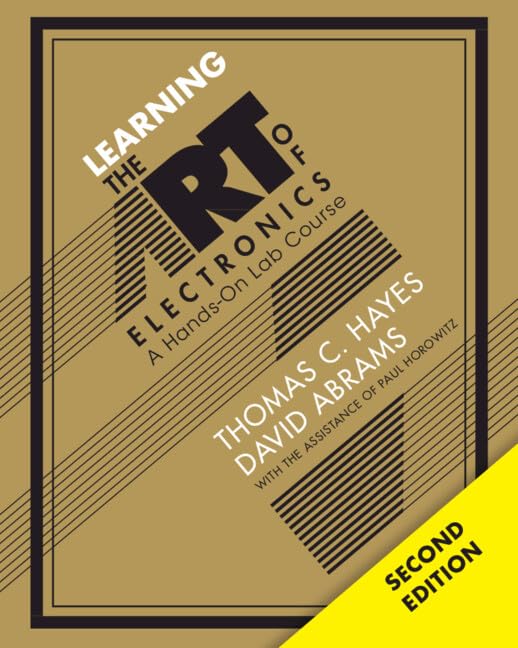
“Learning the Art of Electronics: A Hands-On Lab Course” is a substantial and ambitious update to a highly respected electronics textbook series. Upon delving into its pages, I found it delivers on its promise of a hands-on approach, blending thoughtful explanations with a robust set of lab exercises that reinforce practical skills.
The course structure is clearly designed to evolve the reader from foundational concepts to more complex digital and mixed-signal systems. Analog circuit design, treated comprehensively, includes new labs that deepen understanding of amplifiers and gain control alongside expanded content on testing and measurement tools. These additions feel very timely, as proper use of lab equipment is critical in modern electronics education.
In the digital realm, the shift is particularly striking: moving to FPGA hardware for programmable logic and replacing the older 8051 microcontroller with a modern ARM-based chip substantially broadens the program’s scope. Working with FPGAs offers insight into hardware description languages and concurrent circuit behavior, while ARM-based development unlocks access to more sophisticated peripherals and real-time features. Introducing C programming in this context gives learners a bridge between hardware control and software development.
The embedded projects—such as the lunar lander simulation, voice recorder, and lullaby jukebox—are clearly crafted to be both engaging and technically rich, providing concrete motivation for hardware integration, audio circuitry, and user interface design. Exploration of Integrated Development Environments for compiling and debugging is a vital addition, reflecting contemporary embedded development workflows.
Accessibility has clearly been a priority: supplementary materials, online chapters, video demonstrations, and additional lab resources hosted on the dedicated companion site enhance the text’s value for self-directed study or classroom use. At over a thousand pages, this is a thorough resource with a long shelf life for anyone serious about developing engineering competency in electronics.
While the depth and breadth may initially feel daunting, they’re indicative of the book’s ambition: to provide a holistic, practical education rather than a surface-level overview. This new edition succeeds in modernizing both analog and digital electronics teaching while maintaining the clarity and practicality that have defined the series.
