

Price:
(as of Feb 26, 2026 18:54:58 UTC – Details)

STEM Projects for Kids & Adults Build Your Own Bluetooth Speaker – Science Experiment Electronics Kit
In an age where technology surrounds us but few truly understand it, building something yourself is both empowering and educational. The “STEM Projects for Kids & Adults – Build Your Own Bluetooth Speaker” kit offers an engaging way to explore electronics, sound physics, and circuit design. As someone who regularly dabbles in DIY electronics projects, I was curious to see how this beginner-friendly set compares to other educational kits on the market.
Unboxing and First Impressions
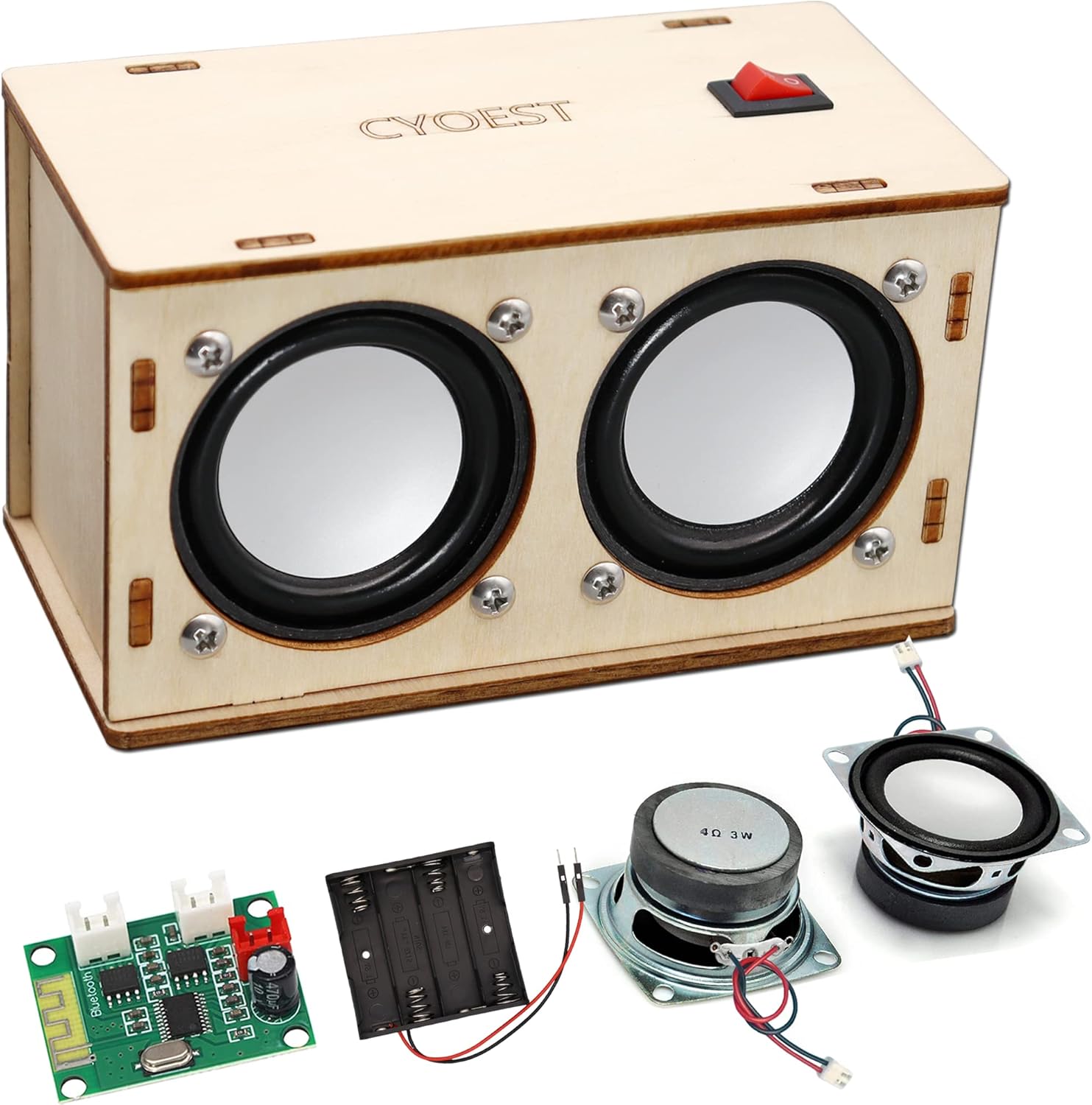
Opening the sturdy package reveals everything needed to construct a working Bluetooth speaker, including a wooden casing, circuit boards, speakers, knobs, batteries, cables, and all necessary small parts. The components feel solid and well-made – no flimsy plastic pieces or poorly cut wood here. The wooden body already shows careful craftsmanship with properly aligned holes and smooth edges, giving confidence before starting assembly.
What I appreciated most is that no soldering is required. For complete beginners, especially children around age 10, many electronics projects can seem daunting when soldering skills are still developing. This design approach makes the kit accessible without frustrating younger tinkerers.
Building Process
The assembly process is genuinely straightforward, living up to the “very very easy” claim. Clear instructions guide users through connecting the Bluetooth board to the speakers, attaching knobs to control volume and power, and mounting everything inside the wooden cabinet. Without needing to handle a soldering iron, assembly becomes more about understanding how parts fit together.
The build took me about 45 minutes as an adult who knows basic DIY skills. For a curious child working through the instructions, it would likely take over an hour – which is actually a good thing. Those extra minutes spent carefully placing each screw and aligning parts keep attention focused on the process, reinforcing learning that easier builds often miss.
One thoughtful touch is proper labeling of components. Even a complete novice can differentiate a power switch from a volume knob without confusion. This level of user-friendliness shows the kit’s designers understand who will be using it – people learning, not experienced builders.
Educational Value
This kit excels at teaching practical STEM concepts without overwhelming users. It demonstrates how speakers produce sound, how Bluetooth transmits audio wirelessly, and how amplifiers boost music volume. Learners see first-hand what a circuit board actually does, rather than just reading theory from a textbook.
Each component serves an educational purpose. The wooden housing isn’t just decorative; it teaches about acoustics and sound resonance. The discrete volume control shows kids that electronics rely on precise, physical controls rather than just “magic.” And clearly seeing the internal wiring demystifies electronics enough to encourage further experimentation.
One little-known benefit of these kinds of kits is how they teach troubleshooting. If something isn’t working, the user learns to examine connections, check battery alignment, or ensure wires are securely seated. These are real skills that transfer to all tech devices.
Audio Performance
For a kit priced under $30, the audio quality surprised me. The kit produces clean sound with respectable volume for its size. The bass is limited, naturally, but midrange and treble are clear and balanced. It won’t compete with expensive speakers, but for listening to podcasts or casual music at a desk or bedside table, the output is perfectly pleasant.
At 3 watts per channel, it easily fills small rooms. The wooden casing also adds a warmth to the sound – wooden enclosures often contribute positively to acoustics. While this speaker won’t replace high-end audio, it definitely proves the project’s practical application, which is exactly what a STEM kit should do.
Usability and Battery Life
Requiring four AA batteries offers flexibility – rechargeable batteries can be used, making the kit more eco-friendly. However, some users may prefer USB power or built-in rechargeability. As battery life goes, moderate listening over several hours is possible before replacement, though heavy daily use would require keeping spare batteries on hand.
The control knobs are tactile and easy to operate, even for kids with less dexterous fingers. Pairing with a phone or other devices is intuitive via standard Bluetooth menus – no complex networking needed.
Pros
- Very beginner-friendly design with no soldering
- Well-crafted wooden enclosure
- Detailed, clear instructions that encourage learning
- Sound quality impressive for a kit
- Encourages troubleshooting skills
- Perfect for parent-child STEM bonding
Cons
- Battery-based power requires replacement over time
- Not modular for expansion or part reuse
- Covering opens with screws, not hinges or clasps
Final Thoughts
This DIY Bluetooth speaker kit strikes an impressive balance between education, usability, and fun. It succeeds where some STEM kits fail – by being simple enough for beginners while still offering a satisfying build that delivers working, practical audio. The wooden design sets it apart from standard plastic kits, adding a premium feel that makes it attractive enough to keep using afterward.
For families looking to introduce electronics in an engaging way, for teachers needing hands-on classroom demonstrations, or for hobbyists wanting a quick weekend project, this set delivers real value. While it’s not a high-fidelity audio device, it fulfills its educational purpose wonderfully – proving that playback technology isn’t magic, it’s engineering you can build yourself.
