

Price:
(as of Feb 26, 2026 19:20:49 UTC – Details)

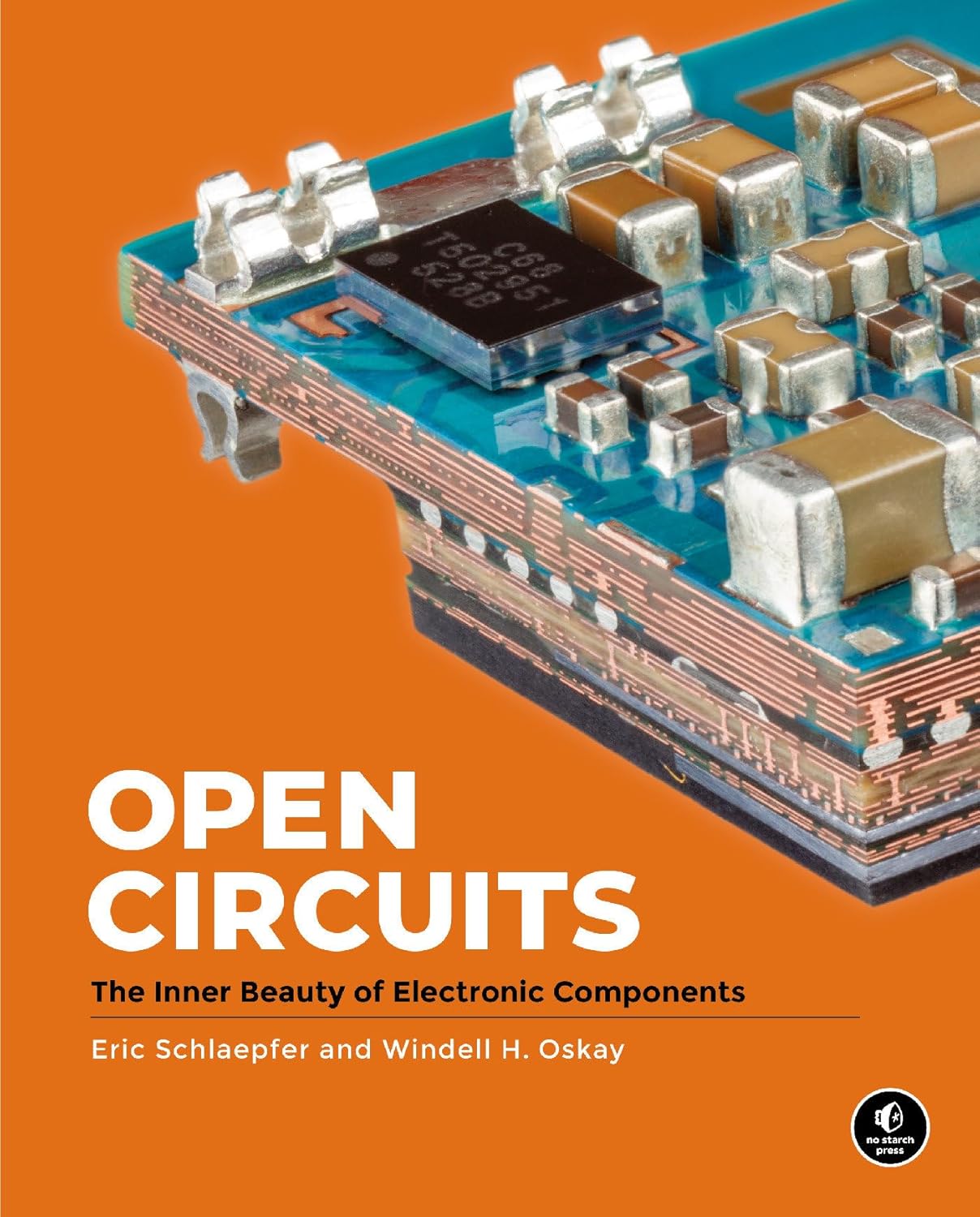
This review will focus on the book Open Circuits: The Inner Beauty of Electronic Components from a purely informational and descriptive standpoint, avoiding any mention of customer feedback. The book aims to take readers behind the polished exteriors of modern electronics, employing high-resolution, precisely executed cross-sections to expose the inner workings of common components. This allows the reader not only to visualize how such objects are built but also to appreciate their aesthetic complexity. The authors have meticulously photographed more than 130 types of components—from the humble resistor and LED to seemingly ordinary objects like USB cables and headphone jacks.
Open Circuits is 304 pages long and, according to the specifications, measures approximately 8.31 x 0.87 x 10.31 inches and weighs just over a pound. Published by No Starch Press, a San Francisco-based independent publisher known for its curated and carefully reviewed titles on technology, science, and engineering, the book is presented as both a technical resource and a visual showcase. Its creators, Eric Schlaepfer and Windell H. Oskay, bring together backgrounds in electronics, physics, photography, and educational publishing. Schlaepfer’s engineering work and popular online presence, and Oskay’s photography as well as his science education and robotics projects, set the stage for a project that blends scientific rigor with artistic sensibility.
The book is meaningful for those in engineering, tinkering, or technology-related fields, but it also appeals to readers who appreciate fine photography and the hidden elegance in everyday objects. The images serve a dual purpose: revealing the component’s function (how it works, often in surprising ways) and its form (how it was constructed). Each element is presented with such clarity and artistry that components often considered purely utilitarian become wondrous subjects in their own right. The authors’ technical background, paired with an artistic eye, ensures that both the science and aesthetics of electronics are faithfully presented, while the visual approach makes detailed technical content approachable.
No Starch Press has produced a hardcover edition of substantial, high-quality construction. The presentation and layout enhance the impact of the photography, while the explanatory text is succinct, focusing attention on the images and their layered craftsmanship. The publisher’s commitment to both entertainment and learning shines through the choice to present the book as much as an art book as a technical catalog.
In summary, Open Circuits delivers a rare opportunity to see the concealed beauty of modern technology through the lens of expert photography and technical understanding. It will appeal to anyone curious about the inner workings of the devices we take for granted, merging science, engineering, and art into a singular visual and educational journey.
