

Price: $599.99
(as of Feb 27, 2026 03:27:00 UTC – Details)

ApoloSign 27″ Digital Calendar: A Comprehensive Review
In today’s fast-paced world, keeping a family organized can feel like a full-time job. The ApoloSign 27″ Digital Calendar positions itself as an all-in-one solution designed to centralize family schedules, chores, smart home management, and even cherished memories in a single, visually appealing display. After thoroughly exploring its features and functionality, here’s my detailed assessment of this ambitious family hub.
Design and Build Quality
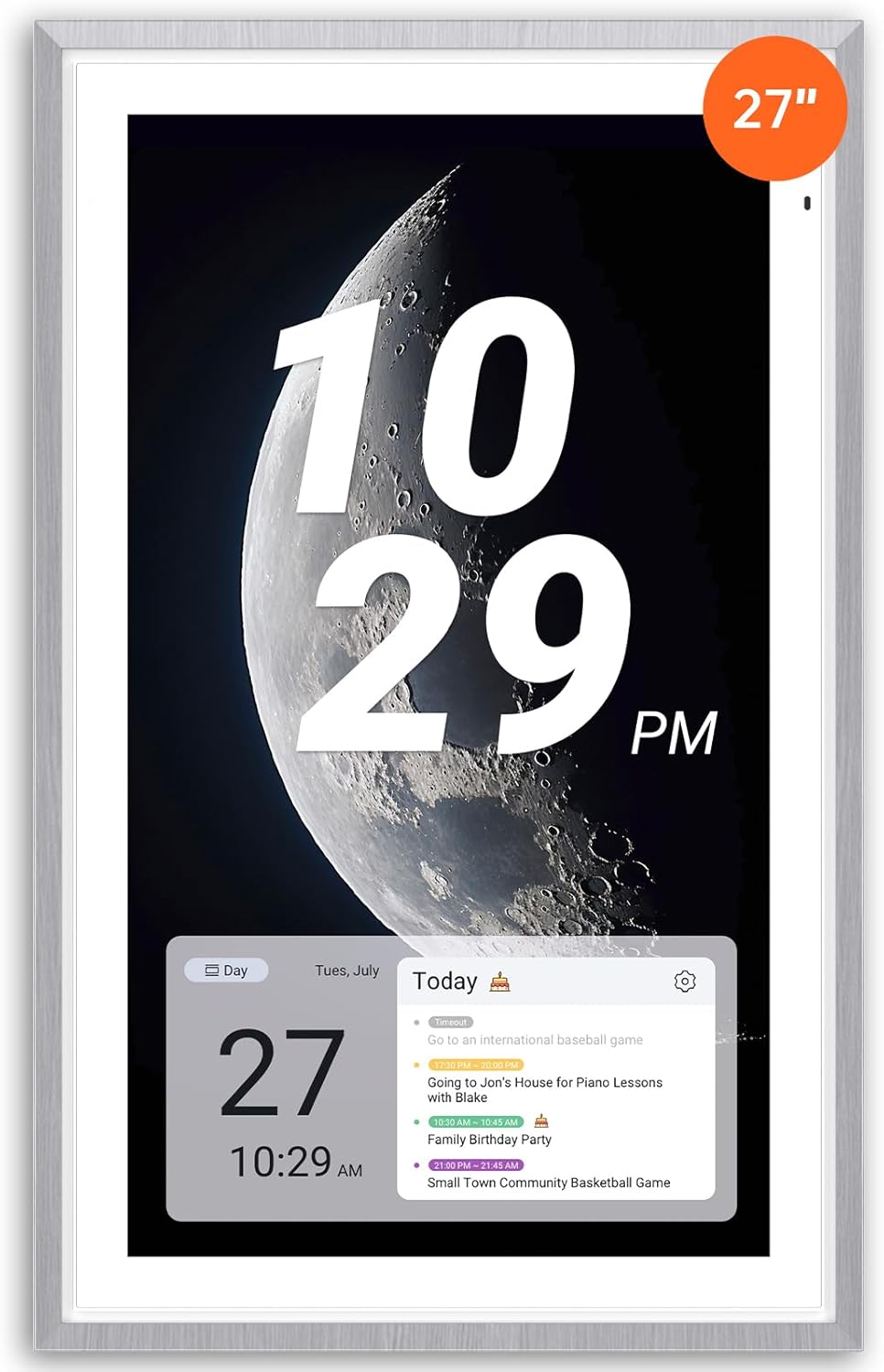
The first thing that strikes you about the ApoloSign is its commanding 27-inch display with a sleek gray finish that blends into most home decors. The anti-glare glass screen is a thoughtful touch, making it easy to view from various angles without dealing with annoying reflections, though it’s worth noting that it’s not the highest-resolution display on the market. The overall aesthetic is clean and modern, with a relatively slim profile that won’t dominate your space.
The touchscreen responsiveness is impressive, with smooth navigation and minimal lag during typical usage. The device feels sturdy and has enough weight to remain stable on a tabletop without feeling flimsy or cheap.
Dual-Mode Functionality: Calendar vs. Android
The dual-mode functionality is where the ApoloSign attempts to differentiate itself. Calendar Mode provides a focused interface that syncs automatically with Google Calendar, Outlook, iCloud, and other popular calendar services. This mode strips away the more complex Android functionality to present a clean, scheduler-focused display. It’s particularly useful for quick glances at the day’s agenda.
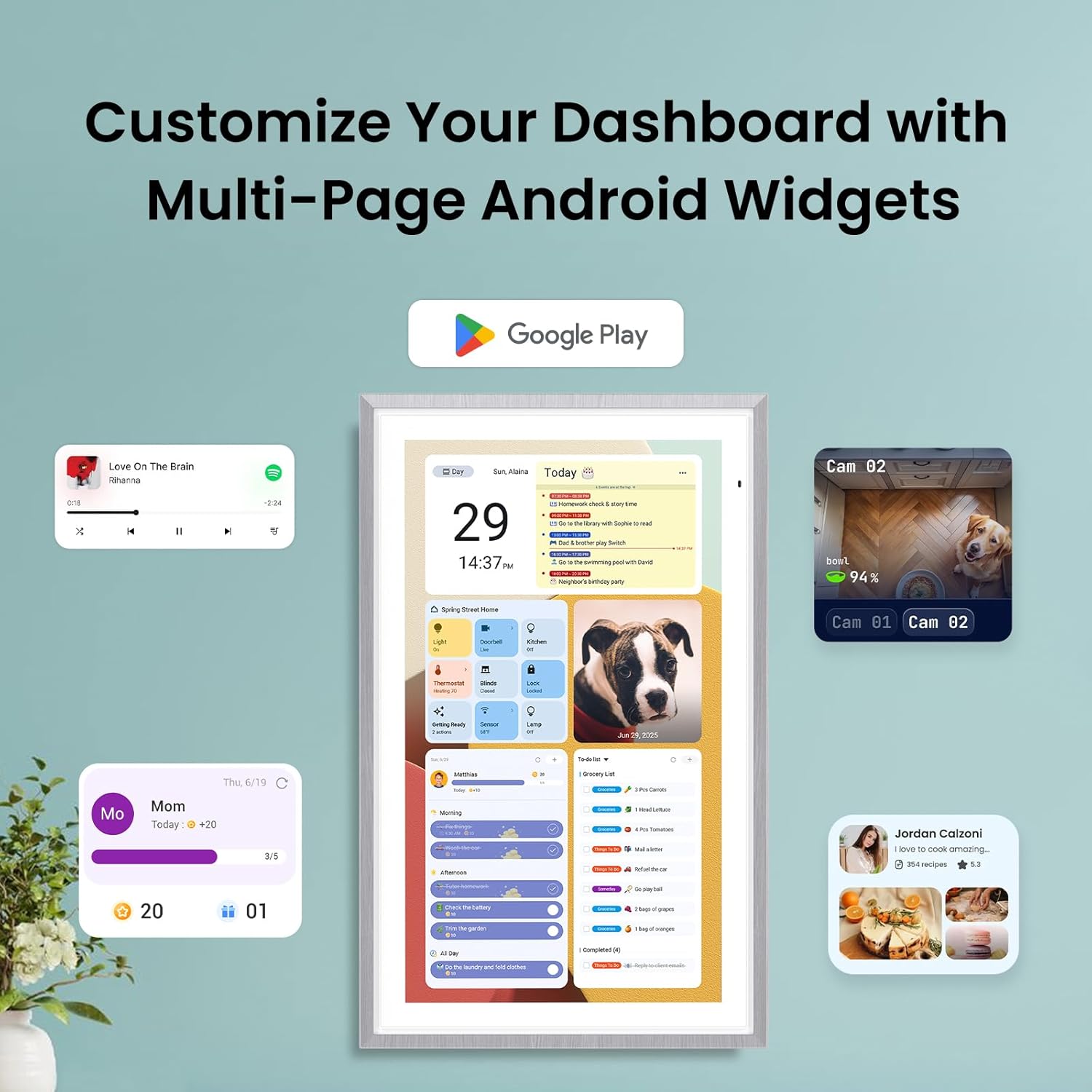
Switching to Android Mode transforms the device into a full-fledged Android tablet capable of running apps from the Google Play Store. This allows you to customize your dashboard with widgets for weather, stocks, to-do lists, and more. The transition between modes is seamless, though power users might find themselves wishing for more flexibility in customizing each mode independently.
One limitation worth mentioning is that the device doesn’t run a full version of Android but rather a modified version optimized for the calendar function, which can sometimes cause compatibility issues with certain apps.
Chore Management and Reward System
For families with children, the chore management system is genuinely innovative. The app allows parents to create color-coded chore lists that sync to the display, making responsibilities visible to everyone. What sets this apart is the rewards-first approach, where children can see their progress toward goals and parents can track completion in real-time.
The system’s gamification elements are well-implemented, making mundane tasks more appealing to younger family members. However, the reward system could benefit from more customization options for different age groups. Something that works for elementary school children might not engage teenagers.
Smart Home Integration
The inclusion of Google Gemini AI opens up smart home possibilities that extend beyond mere scheduling. With the four built-in microphones, voice commands are well-received, and the ability to check weather, set alarms, and manage tasks through voice is genuinely convenient when your hands are full.
The integration with Google Home is perhaps the device’s most practical feature. Being able to control doorbells, cameras, lights, and other connected devices from a dedicated display is genuinely useful, especially for households that have already invested in a smart home ecosystem. This turns the ApoloSign from a simple calendar into a legitimate command center.
However, if you’re committed to Amazon Alexa or Apple’s HomeKit, this device might not integrate as seamlessly with your existing setup.
Smart Photo Frame Capabilities
The photo frame functionality works well with Google Photos integration, automatically cycling through uploaded images. The HD screen does justice to family photos, and the ability to play videos adds versatility. Unlike some competitors, there are no subscription fees for these features, which is appreciated.
The auto-brightness adjustment works effectively, though the sleep mode, while energy-efficient, lacks the granularity of scheduling when it activates. You can either have it always on or set to sleep after a period, but can’t customize it to remain active during specific hours while sleeping after others.
Widget Dashboard Customization
The dashboard customization options are robust, allowing you to tailor the display to your family’s specific needs. Adding multiple pages of widgets is particularly useful for households with different scheduling needs or priorities. You can set up one screen for morning routines with weather and news, another for appointments and chores, and another for evening activities.
That said, adding too many widgets can make the interface feel cluttered, and scrolling between pages occasionally suffers from slight stutter on the home screen. The customization options are good but not quite as deep as what you’d find on a high-end tablet.
Performance and Connectivity
With a quad-core processor and 2GB of RAM, the device handles its intended tasks well, though it’s not designed for intensive multitasking or gaming. Connectivity includes Wi-Fi and Bluetooth, while ports include HDMI (useful for connecting to other displays in a multi-screen setup) and standard audio jacks.
The 4000mAh battery (or plug-in, depending on the model variant) provides reasonable flexibility in placement, though most users will likely keep it plugged in most of the time due to the display size. The power consumption is reasonable for what the device offers, and the included adapter provides stable power delivery.
Software and App Ecosystem
Running Android allows access to a respectable range of apps from the Google Play Store, though some optimization for the larger screen is hit-or-miss. The dedicated ApoloSign Calendar app is the primary interface and works well for family organization, handling multiple calendars, creating events, and assigning tasks efficiently.
The learning curve is manageable, but families not accustomed to technology might need assistance with initial setup and customization. Fortunately, the 24/7 expert support is genuinely helpful in navigating these early stages.
Final Thoughts
The ApoloSign 27″ Digital Calendar manages to carve out a niche as a command center for the modern, connected family. Its strengths lie in bringing together scheduling, chore management, smart home control, and photo display in a single elegant package.
It excels for families deeply invested in the Google ecosystem and those who value visual organization. The chore management system particularly stands out for households with children, making responsibility tracking engaging rather than chore-like.
However, it’s not without limitations. The display, while coated for anti-glare, doesn’t match premium tablet resolutions. Some users might find the custom Android version limiting compared to standard tablets, and the device feels most at home in Google-centric households.
At its price point, the ApoloSign competes with both premium tablets and dedicated smart displays, but offers unique features in both categories. For families seeking to centralize their scheduling, chores, and smart home controls with visual appeal, it’s a compelling option that delivers on its promises while leaving some room for improvement in specific areas.
If you’re looking for a family organizational hub that goes beyond simple scheduling, the ApoloSign deserves serious consideration.
