




Price: $69.99
(as of Feb 27, 2026 00:55:57 UTC – Details)

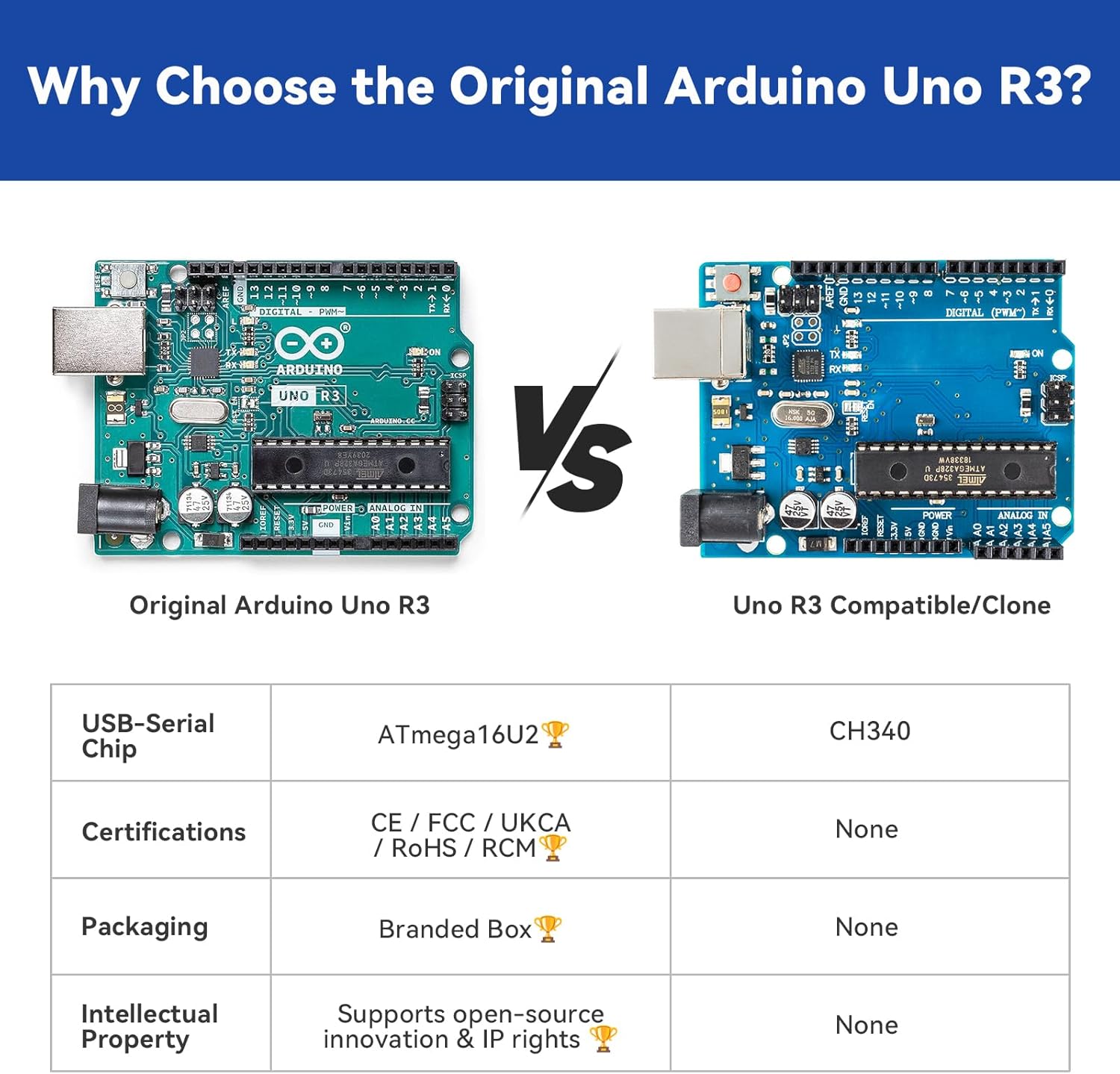
At the heart of the SunFounder Inventor Lab Starter Kit is the inclusion of an Original Arduino Uno R3 REV3 board, certified by Arduino SA, which immediately sets the tone for a reliable and authentic hardware experience. For anyone starting out, having access to an official board means consistent board performance, easy access to community troubleshooting resources, and long-term compatibility with the vast library of Arduino sketches and third-party shields. Beyond the microcontroller itself, the kit comes with a high-quality breadboard and a RAB (Raspberry Pi, Arduino, Breadboard) holder that helps organize these components, minimizing cable clutter and accidental disconnects—especially important as circuit complexity grows.
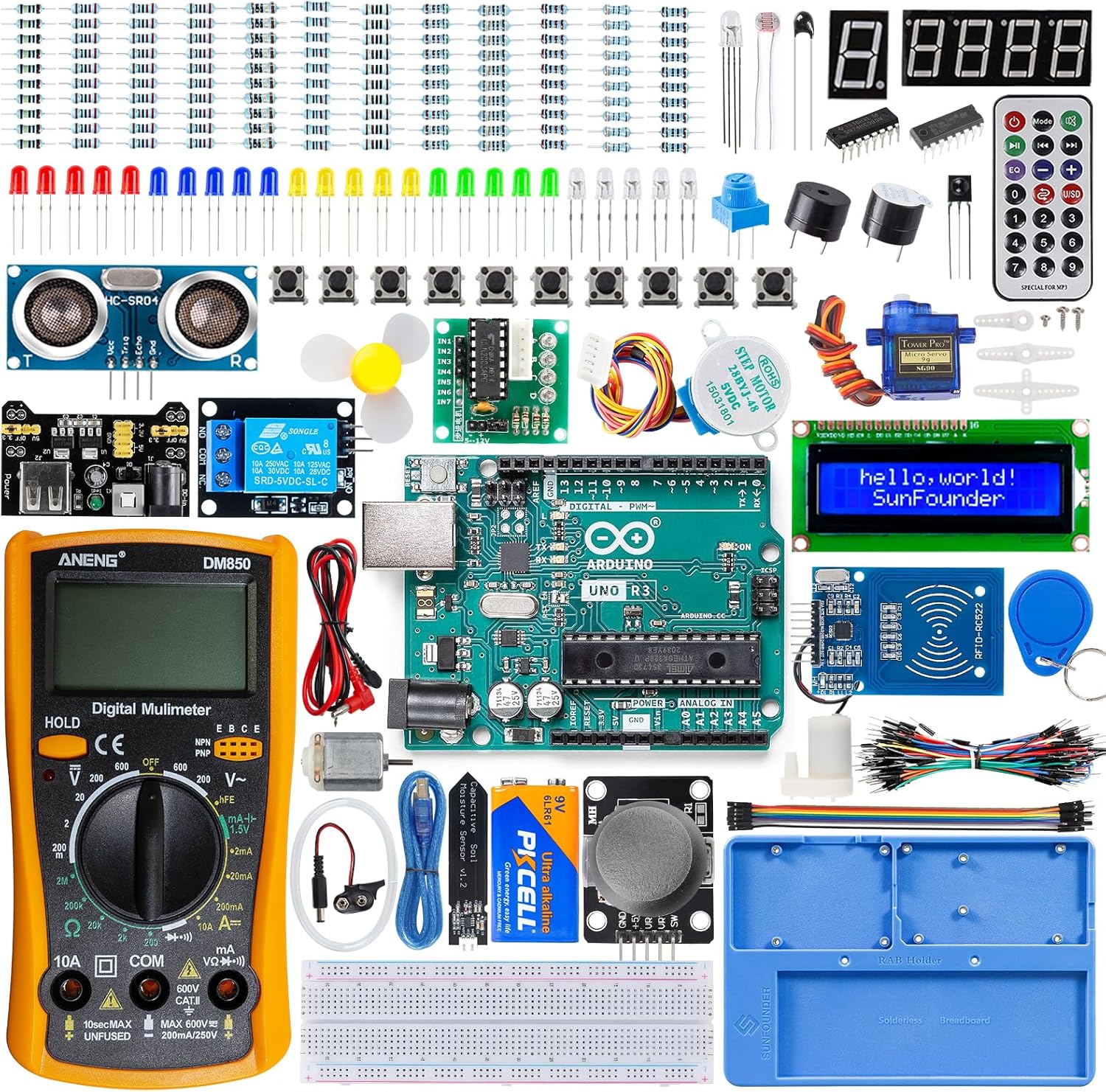
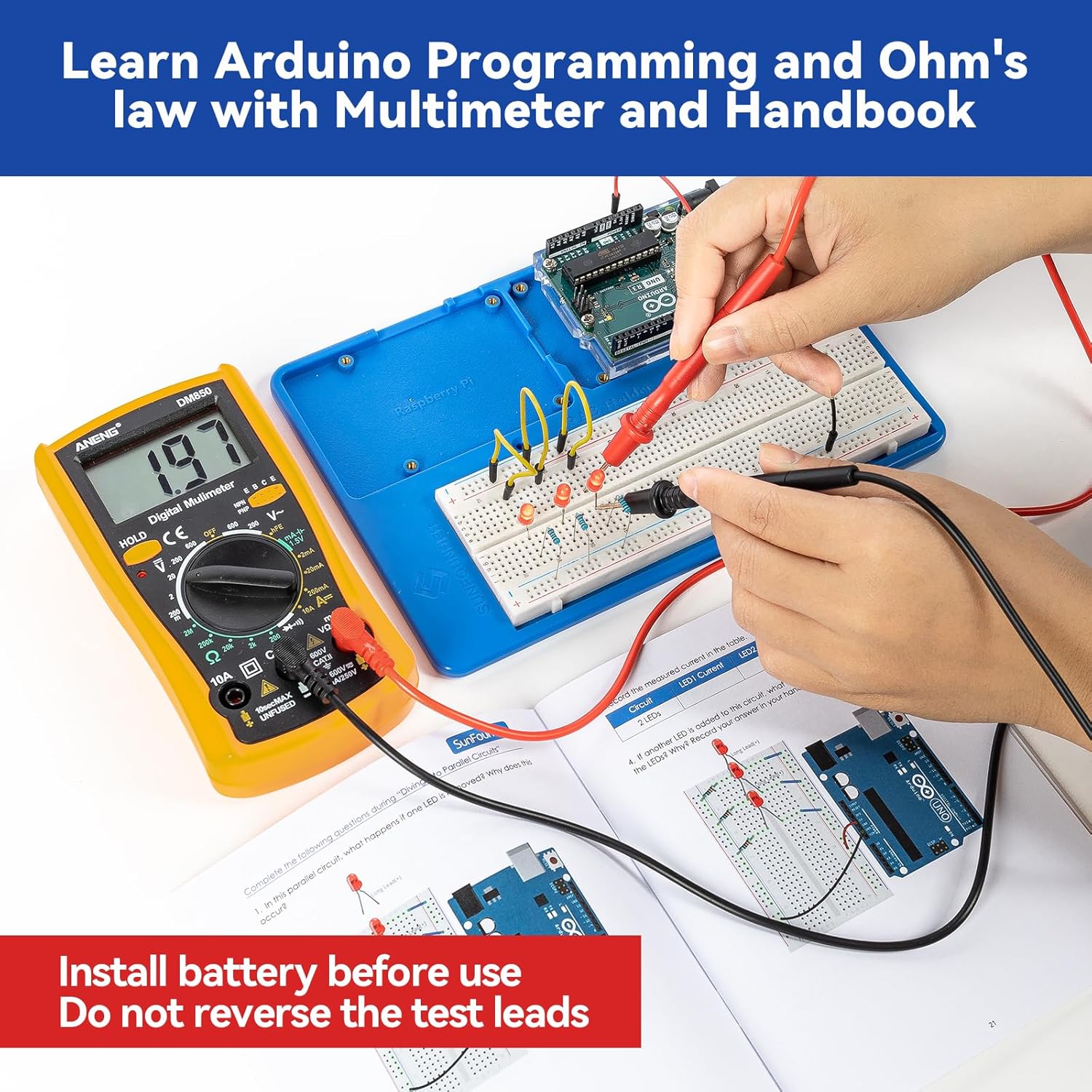
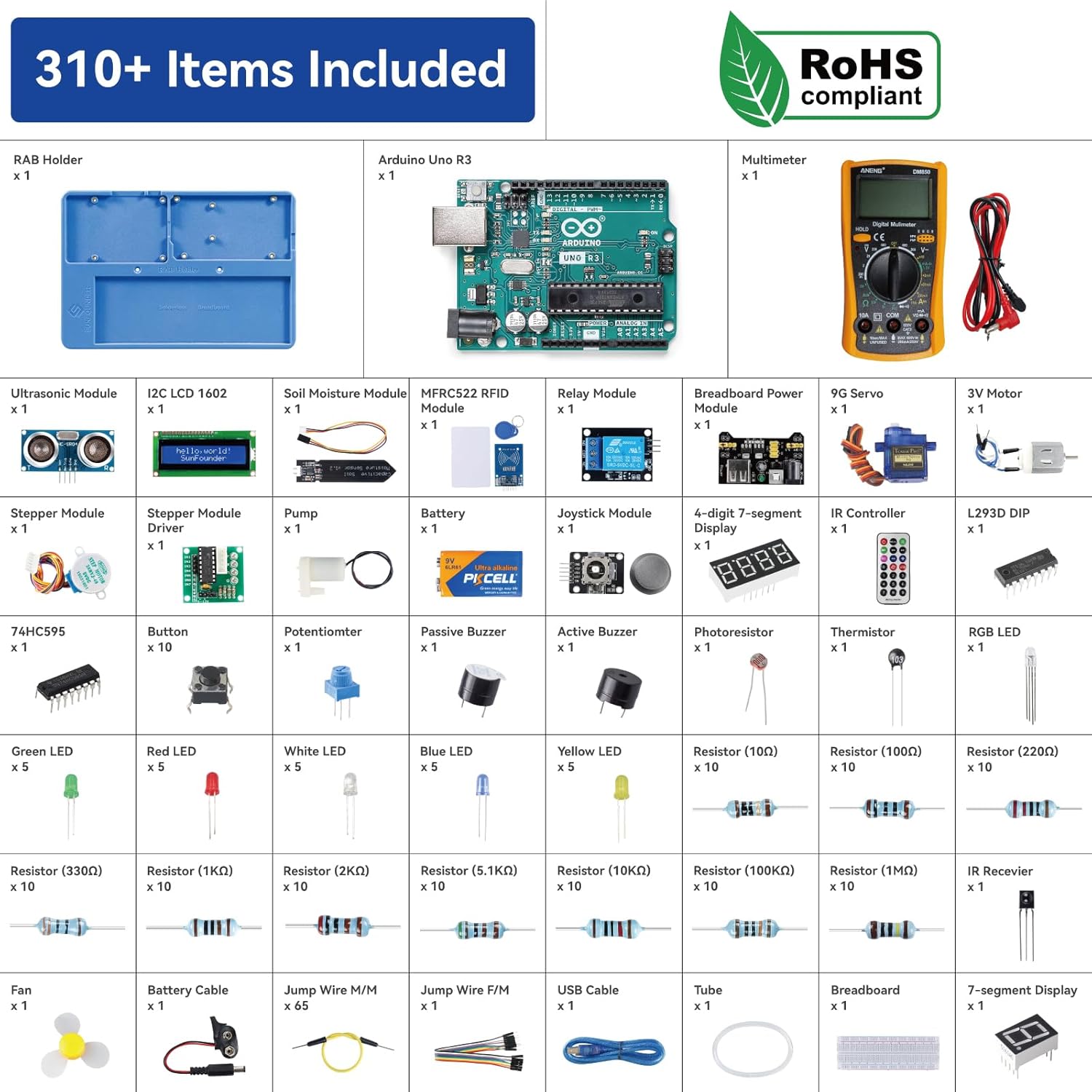
Inside the compact storage box is a selection of over 200 essential electronic components, spanning basic resistors, capacitors, buttons, potentiometers, LEDs, and buzzers to more advanced parts like an LCD1602 display, an RFID module, an ultrasonic sensor, and even a proper multimeter. This is one of the few starter kits that gives you not just breadboarding essentials but sensors and actuators often reserved for intermediate projects. Having an included multimeter is a thoughtful touch—students and beginners can actually measure circuit voltages and continuity as they build, reinforcing a deeper understanding of electronics theory into practice.
Where the kit truly strengthens learning is in the structure of its 34 project lessons and the 40+ video courses accompanying them. These are not just cursory wiring diagrams; the majority of projects follow a well-thought-out progression. For example, you might start with a simple LED blink, advance to an LED chaser effect, and then into something more complex like a “smart trash can” (using a servo to open when the ultrasonic sensor detects proximity) or an automatic soap dispenser driven by an infrared sensor and a relay. The latter projects are far more ambitious than typical beginner kits and offer genuine real-world application. Every lesson is accompanied by a PDF or step-by-step text guide, and the circuit diagrams and code examples are easy to follow—an important detail for learners who want to walk away with accurate, reusable code.
Design details matter in this kit: the small ABS storage box, while modest in material, keeps all components sorted so parts are not lost or mixed, and the RAB holder’s channel system ensures the breadboard is secure during build sessions. A battery holder is included, which means you aren’t confined to working tethered to a computer; you can prototype truly untethered devices—a boon for portability and for introducing the concept of power management. The RoHS compliance is not merely a marketing label here; it’s assurance that the kit meets strict guidelines for material safety, particularly important when working with students or gifting to younger beginners.
The project list leans toward practical electronics, not just blinking lights. Projects simulate everyday devices: a remote-controlled fan, a scratching alarm, an electronic keyboard using a keypad and a buzzer, and a “game machine” that uses buttons, sensors, and the LCD to create interactive experiences. Such variety ensures that learners can pivot between programming-focused and hardware-focused projects, maintaining engagement over many sessions.
It’s worth noting that beyond the core book, the SunFounder team provides a wealth of online resources: free video tutorials for almost every project, technical support channels, and a community forum where learners can exchange ideas, ask questions, or share modifications. For total beginners aged 8 and up, this kind of after-purchase support is invaluable; it transforms the kit from a one-time build box into a sustained learning pathway.
If comparing to other “starter kits” on the market, many cut corners: they may omit the multimeter, use lower-grade clones of key boards, or offer simpler component sets and static “cookbook” tutorials. By contrast, this Inventor Lab’s inclusion of useful sensors, storage, organizational holders, power autonomy, and a robust safety record makes it both beginner-friendly and classroom-ready.
Finally, value is a strong selling point: for the price, the combination of official Arduino hardware, a multimeter, dozens of sensors and actuators, a portable organizer, and broad learning content is rare among introductory kits. The initial investment opens doors to a wide range of projects beyond the provided tutorials, from robotics to IoT-inspired builds—particularly appealing to those who want to start with guided learning but quickly move to independent hacking and innovation.
All in all, the SunFounder Inventor Lab Starter Kit stands out as a complete, well-designed educational gateway to electronics and Arduino programming. It blends completeness, quality, and accessibility—making it an ideal choice for teachers, self-learners, engineering students, and hobbyists who want their electronics learning journey to start on a solid, safe, and extensible foundation.
