Price: $64.99 - $35.99
(as of Feb 27, 2026 00:17:14 UTC – Details)

Jump start your journey with electronics! If you’ve thought about getting into electronics, but don’t know where to start, this book gives you the information you need. Starting with the basics of electricity and circuits, you’ll be introduced to digital electronics and microcontrollers, capacitors and inductors, and amplification circuits—all while gaining the basic tools and information you need to start working with low-power electronics.
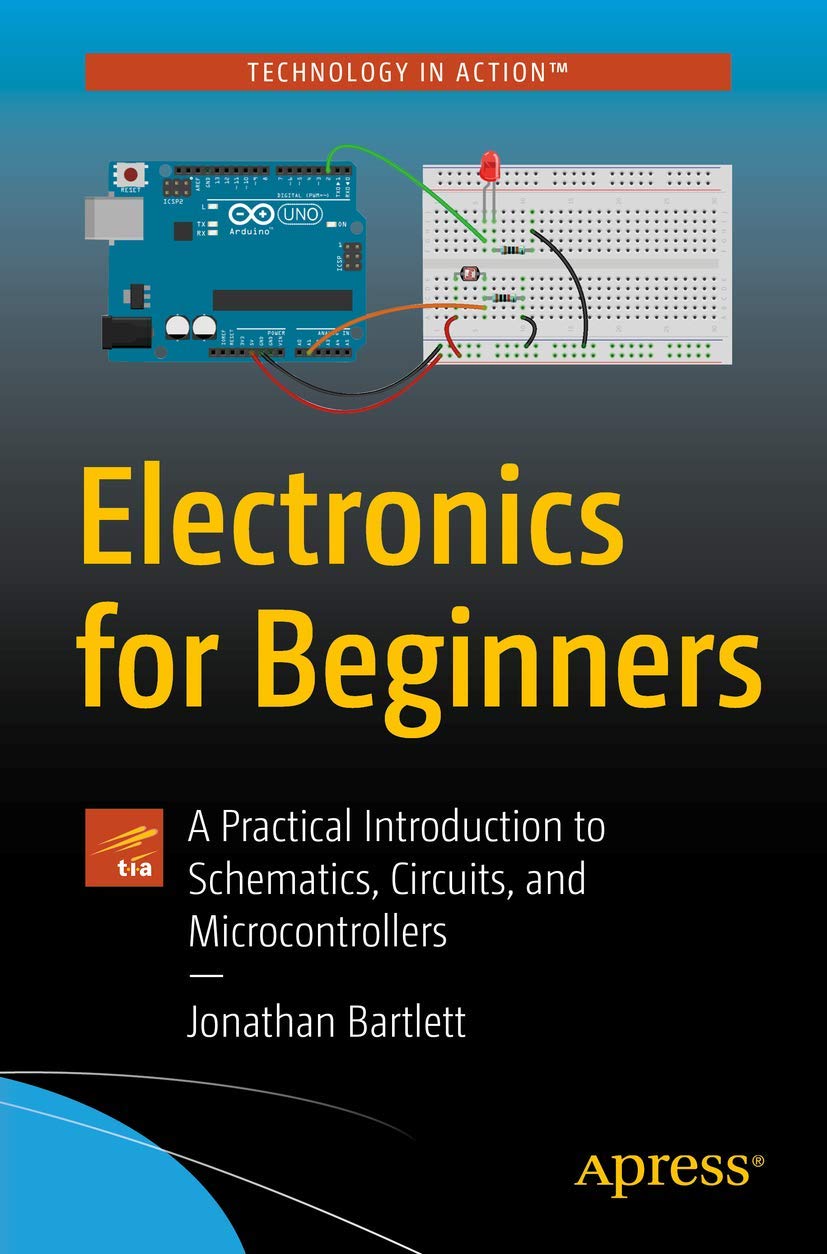
Electronics for Beginners walks the fine line of focusing on projects-based learning, while still keeping electronics front-and-center. You’ll learn the mathematics of circuits in an uncomplicated fashion and see how schematics map to actual breadboards. Written for the absolute beginner, this book steers clear of being too math-heavy, giving readers the key information they need to get started on their electronics journey.
Key features of the book:
– Covers fundamental concepts from electricity to electronics
– Introduces digital electronics and microcontrollers
– Explores passive components like capacitors and inductors
– Includes introduction to amplification circuits
– Projects-based learning approach
– Minimal use of mathematics makes it beginner-friendly
– 530 pages in the print edition
– Published in September 2020
The book aims to make electronics accessible to absolute beginners by focusing on practical applications while still conveying important concepts. The author steers clear of heavy mathematics, making the content more approachable for readers of all backgrounds.
The projects-based learning approach allows readers to build circuits and gain hands-on experience while learning the underlying theory. This makes the material more engaging and helps reinforce concepts through practical application.
The book covers practical electronics usage, provides detailed information on the mathematics of circuits, and shows how schematics map to actual breadboards used in circuit prototyping. It guides readers on how to build various circuits and informs on the integration of safe, battery-operated systems.
Topics like microcontrollers are addressed in a way that makes them accessible to beginners, avoiding overly complex explanations while still conveying the essential knowledge needed to start working with them.
The book’s length of 530 pages suggests comprehensive coverage of the topics, allowing for detailed explanations and multiple projects that build on each other. This allows readers to progressively build their knowledge and skills.
The publication date of September 2020 means the content is relatively recent and likely includes up-to-date information on current components, tools, and techniques.
Overall, this book appears well-suited for its stated audience of makers, students, and beginners of any age interested in getting started with electronics. By balancing theoretical knowledge with practical projects and avoiding overly complex mathematics, it aims to provide a solid foundation for those new to the field of electronics.
