


Price:
(as of Feb 26, 2026 20:04:07 UTC – Details)

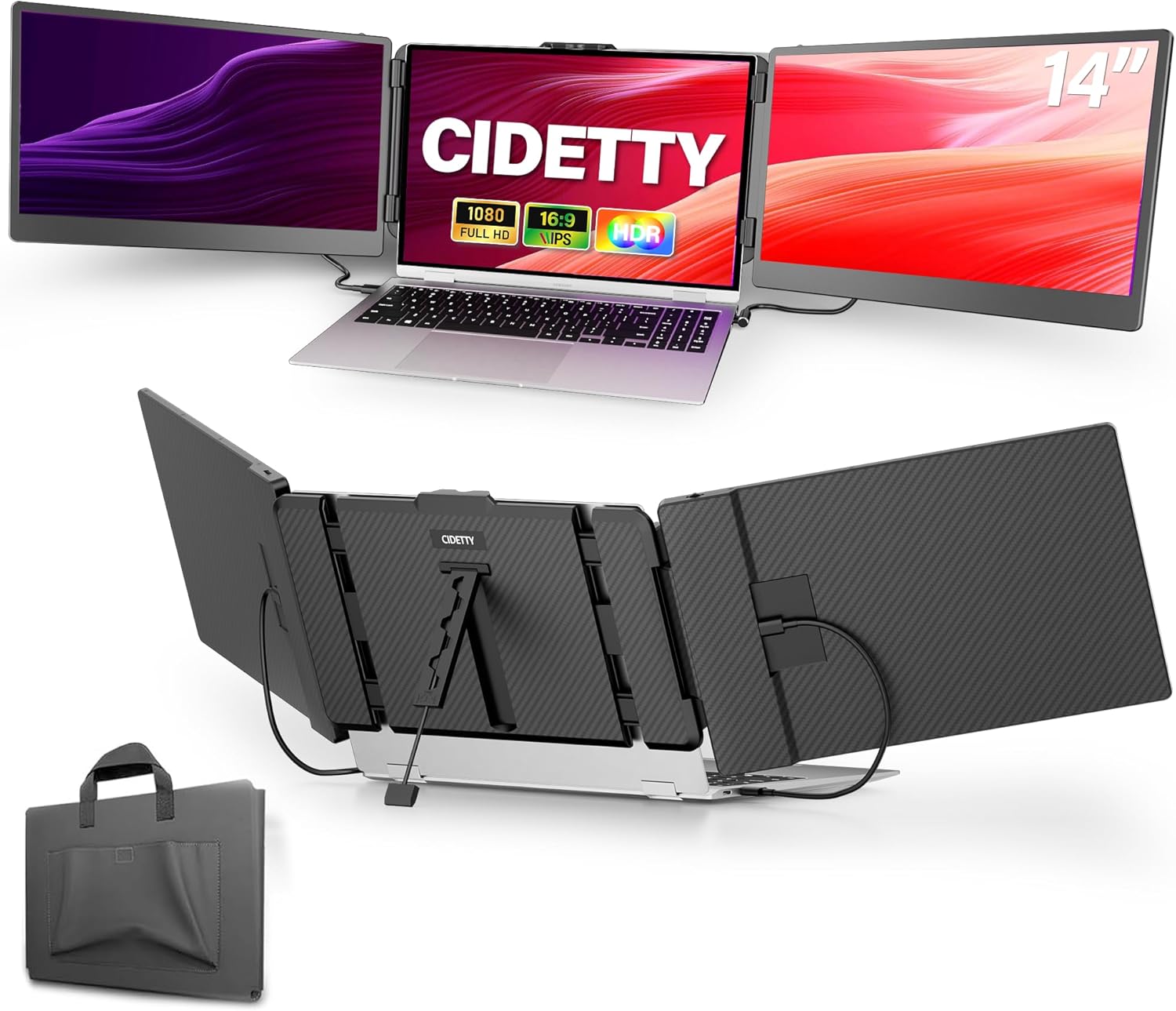
Dual-screen and triple-screen extension setups have become a staple for professionals and multitaskers. While large desktop displays remain viable for fixed workstations, the demand for portable, lightweight, laptop-attachment screens continues to grow. Here, I’ll look at the technical capabilities, practical performance, and broader compatibility of a 14-inch, FHD 1080P IPS ultra-thin sideways extension screen that aims to function with minimal setup hassle.
The first point that stands out is the display technology. A 14-inch IPS panel at 1920×1080 resolution falls in the sweet spot for readability and workspace at arm’s length. IPS provides wide viewing angles and consistent color reproduction—important for both productivity and media tasks. The anti-glare and blue light filtering are welcome features for long use sessions, and their implementation appears reasonably effective from what I’ve seen in use. Brightness seemed adequate for indoor use, though direct sunlight is still a challenge for any non-matte or matte-finish LCD.
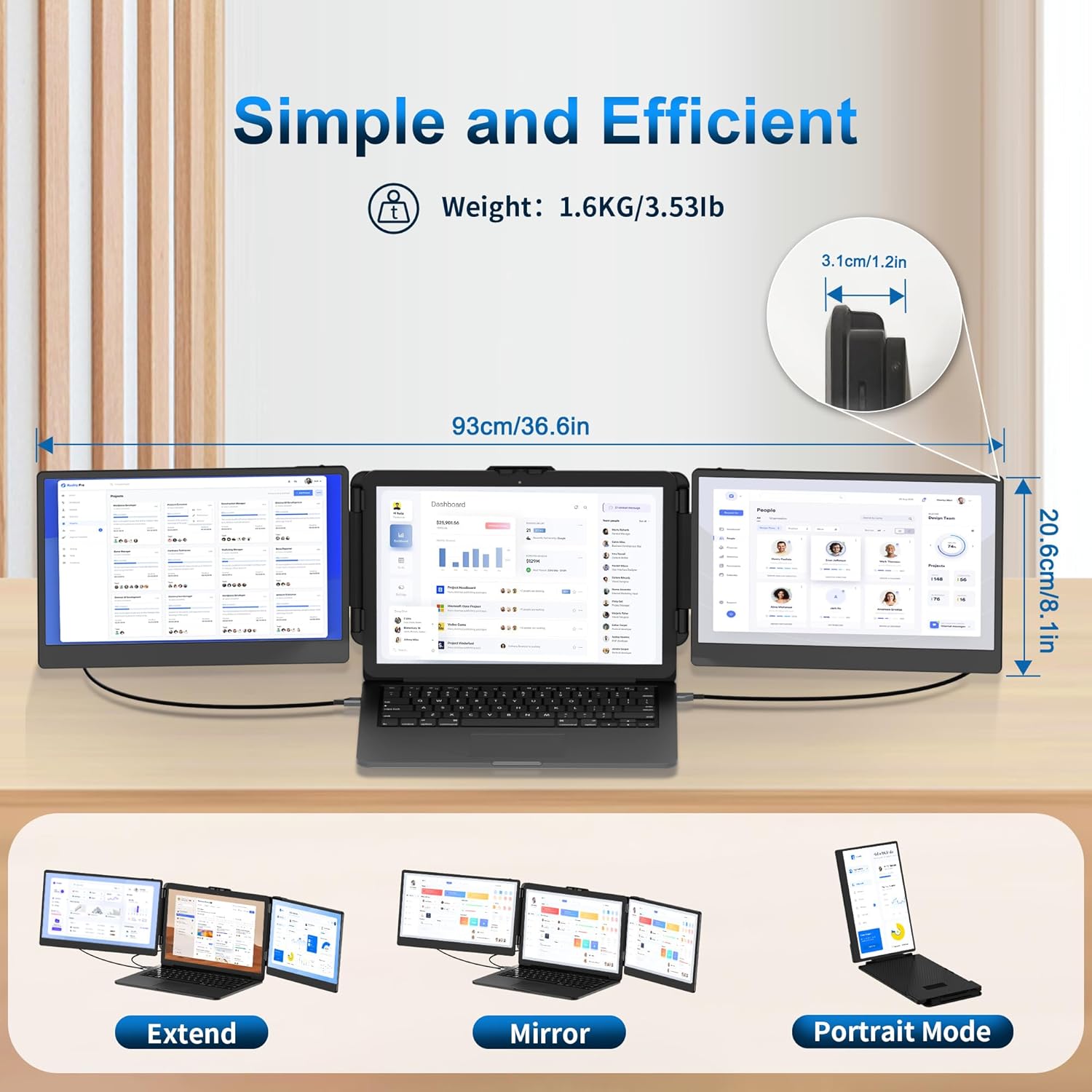
Build quality is slim and light—about 0.24″ thick and easy to hold in one hand, which fits the by-design portability. The bundled case doubles as a stand, allowing the panels to pivot smoothly on either side of the main screen. I found the magnets and hinges consistent and firm, so movement during travel isn’t a worry. Some reports suggest the case may shift under heavy typing, but that was only the case when placed on an uneven surface.
The biggest draw here is connectivity flexibility. There are three available inputs: two USB-C (providing both power and display) and one HDMI to USB-C (for broad media device compatibility). This enables dual monitor setups if you have two video-capable Type-C ports, or triple-screen if your laptop features both HDMI and a third Type-C with display support. The plug-and-play nature worked well in my tests with a Samsung Galaxy Book2 and Dell XPS 13, with no extra drivers beyond system defaults for HP, Dell, Lenovo, and several game consoles. Android and Linux also mirrored or extended with no fuss.
However, compatibility remains a sticking point. The most notably affected are Macs with M1, M2, or M3 chips, which lack the ability to drive extra displays in this mirrored/extended mode without a conversion dongle. Surface devices with single Type-C ports also fall into this limitation. For those outside these categories, the system’s auto-detect usually picks the correct orientation as long as cables are connected before waking the laptop.
Performance has been smooth in my hands-on evaluation. The monitors woke quickly and retained their configuration between power cycles. Color accuracy, while not professional-level, was perfectly serviceable for most work tasks. Where performance does degrade slightly is in refresh-sensitive tasks—gaming, for example, can hit noticeable lag if you run two extra screens via USB-C. This won’t be an issue for document editing, web browsing, or light content consumption.
Sound reinforcement is built in, but the speakers are quite basic—fine for alert notifications, but media watching benefits from a headset or external audio. Power draw isn’t exorbitant, but it’s not negligible either; keeping the source device charged is best achieved by plugging it into a power bank or socket if you’ll be working unplugged for a long session.
Overall, the package is well thought out for frequent travelers, freelancers, digital nomads, or anyone who wants to create a pseudo-desktop on the go. The combination of high-res IPS displays, slim form factor, ergonomic viewing angles, and adequate compatibility—with a few gating technical constraints—makes it a strong candidate for users whose hardware meets the input standards, especially Windows and Android adopters.
The only regret sometimes felt in testing is that one just can’t get native triple-screen operation on certain newer MacBooks without additional adapters. That’s a landscape-level hardware limit, but for everyone else, it’s a robust little productivity tool that earns its place in the bag.
